Best practices for saving paint in industrial painting with equipment, automation, and quality control.
Reducing paint waste in industrial painting is one of the fastest ways to increase margins and competitiveness in the industrial sector. An efficient painting system lowers direct costs, increases productivity, and reduces environmental impact. By applying technical methods, automation, and rigorous control, it is possible to save paint without compromising quality. This article presents a practical, data-driven guide.
Understanding where paint waste occurs in industrial painting.
To know How to reduce paint waste in industrial painting., The first step is to map where the ink is lost along the line. The main critical points are inadequate surface preparation, wrong viscosity choice, overspray, splatter, and leftover paint on lines and hoses.
Studies in industrial plants indicate that between 15 and 30 percent of purchased paint does not reach the final product. In booths without adequate airflow control and without spray gun adjustment, overspray can account for up to 50 percent of the loss. This initial diagnosis guides investment in... anti-waste ink equipment for factories.
Calculation of ideal paint consumption per m² in industrial production.
Define How to calculate ideal paint consumption per m² in industrial production. It is essential for controlling costs and comparing product lines. The standard calculation considers the desired dry film thickness, the solids content by volume of the paint, and the efficiency of the application process.
A practical formula is: Theoretical consumption equals (thickness in micrometers multiplied by area in m² multiplied by density) divided by solids by volume. In manual lines, actual efficiency can drop to 30 to 40 percent, while automated systems reach 70 percent or more. By comparing actual consumption with theoretical consumption, it is possible to measure losses and validate... Best practices for saving paint in industrial painting..
Application techniques that reduce paint splatter and fallout.
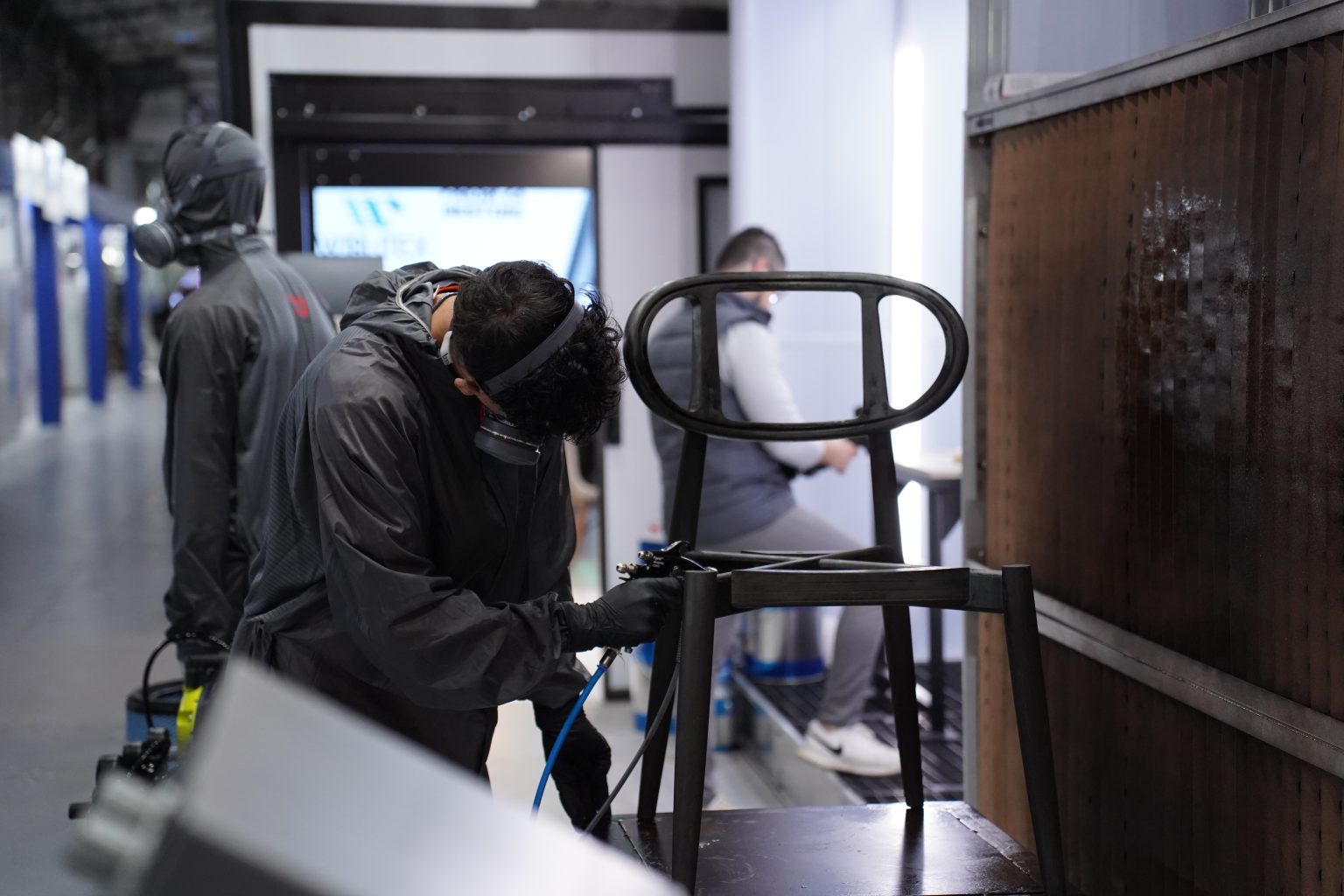
Among the main Application techniques that reduce paint splatter and fallout. Correct air pressure adjustment, proper nozzle selection, and ideal distance between the gun and the workpiece are crucial. These parameters directly influence particle size and overspray rate.
Tests in the metallurgical industry show that simply standardizing pressure and distance, along with operator training, reduces paint consumption by 8 to 12 percent. Adopting HVLP or high-performance spray guns and electrostatic systems can increase this gain to over 20 percent. These measures complement other choices made by... supplier of industrial paints with less waste, that offers products with a high solids content and good atomization.
Equipment for reducing ink waste
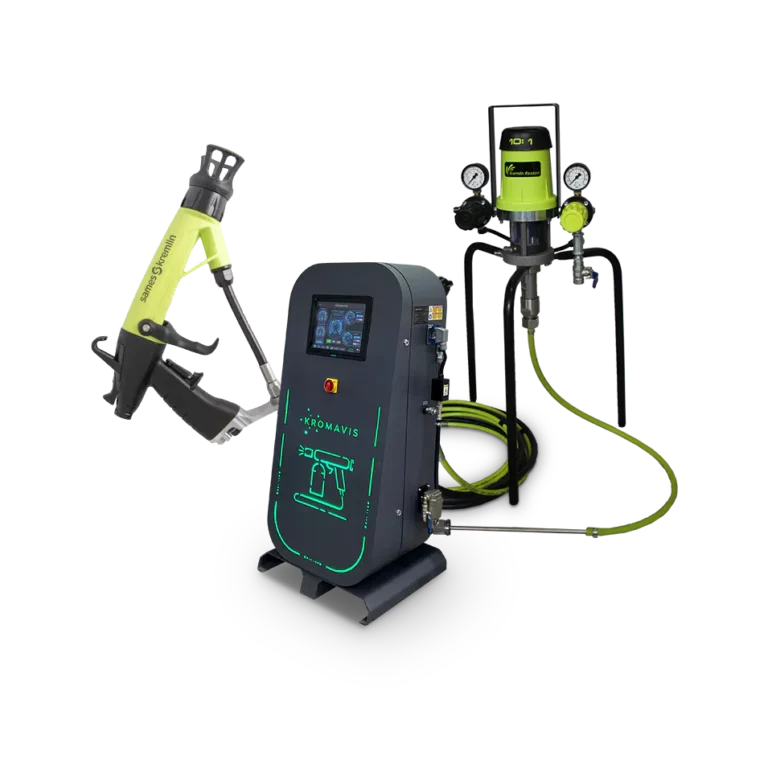
You anti-waste ink equipment for factories These include high-precision metering pumps, quick color change systems, low internal volume lines, and automatic spray guns. These features reduce ink dead volume and minimize leftover ink at the end of each batch.
Already industrial ink recirculation systems They stand out for keeping the ink in motion, preventing sedimentation and unnecessary waste. Case studies in the agricultural implement industry report reductions of up to 25 percent in total ink consumption after adopting closed recirculation. In many cases, the return on investment occurs in less than 12 to 18 months, considering only material savings.
Quality control to minimize rework and ink waste.
A good Quality control to minimize rework due to improper paint application. It begins with surface preparation, including checking roughness, cleanliness, and adhesion. Any failure at this stage tends to lead to repainting, increasing paint consumption by up to 30 percent in certain batches.
The use of film thickness gauges, salt spray test chambers, and standardized checklists reduces variability between shifts and operators. Reports from automotive plants indicate that a reduction in rework of just 3 percentage points can represent annual savings of hundreds of thousands of reais. This integrated control works in conjunction with... Application techniques that reduce paint splatter and fallout., consolidating sustainable gains.
How to choose suppliers and integrate solutions for less waste.
When selecting a supplier of industrial paints with less waste, It is important to evaluate not only the price per liter, but also the consumption per m² under real production conditions. Paints with a higher solids content, good stability, and a wide application window tend to generate less rework.
Another point is to seek partners, such as Koria, that offer technical support in How to reduce paint waste in industrial painting., This includes in-line testing, consumption simulation, and recommendations for equipment and sensors. Integrating ink, application, automation, and quality control into a single project increases the predictability of the ROI. Ultimately, the combination of technology, data, and training is what sustains long-term ink savings.
Conclusion
Reducing paint waste in industrial painting requires a systemic approach, combining ideal consumption calculations, application techniques, automation, and quality control. When these pillars work together, it's possible to lower costs, increase productivity, and reduce environmental impact without compromising the finish. Specialized companies like KORIA support the industrial sector in selecting technologies, helping to transform process data into real and measurable savings.