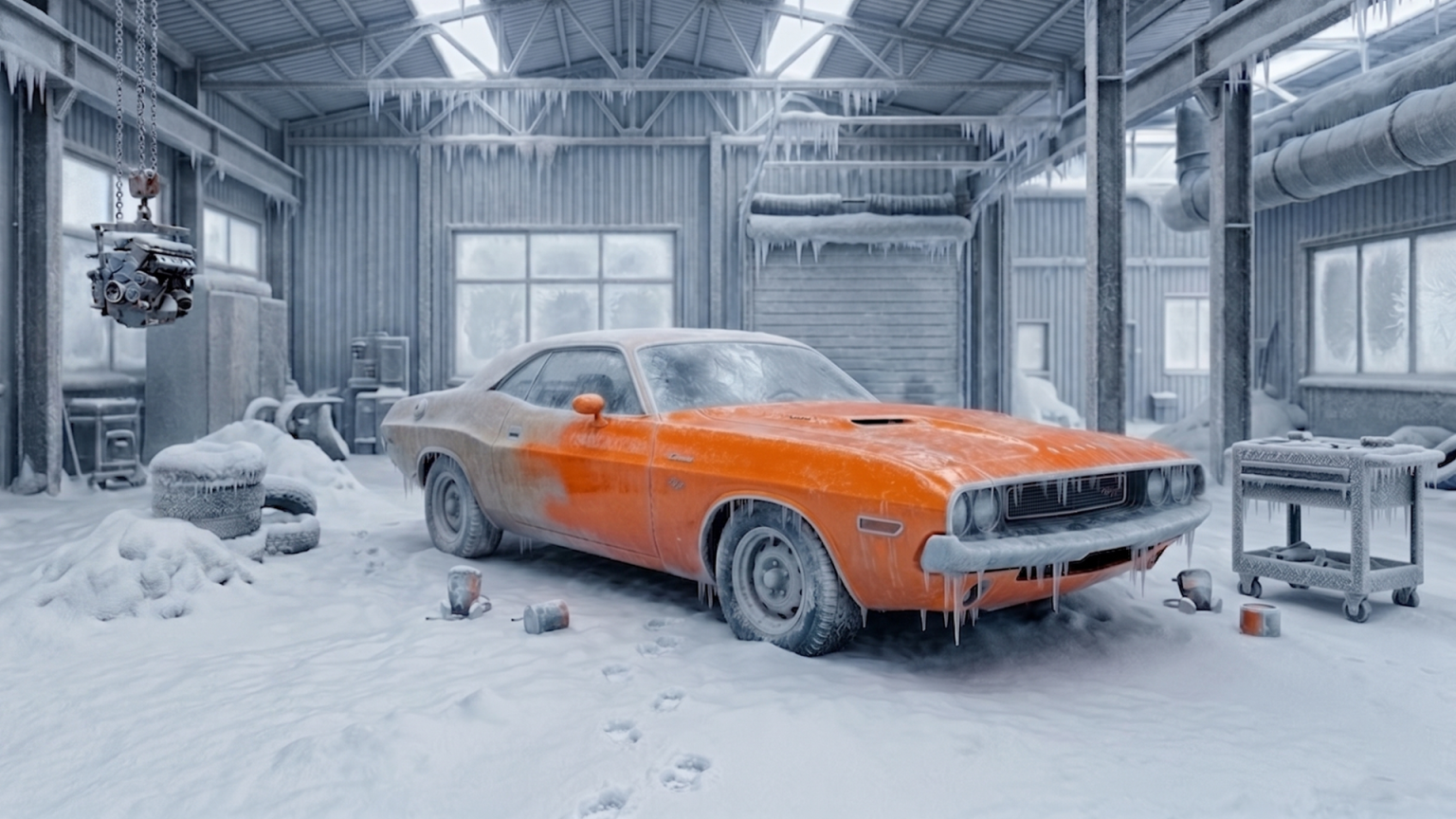
The invCold weather and sudden temperature drops bring significant challenges to the factory floor, especially in the painting sector. If you notice that production "stalls" on colder days, know that this is not just an impression: the climate directly affects the chemical properties of the paint and the performance of the equipment. In this educational guide, we will understand why productivity decreases in the cold and how to mitigate these effects to keep your paint line efficient.
1. The problem of viscosity: The ink becomes "heavy"“
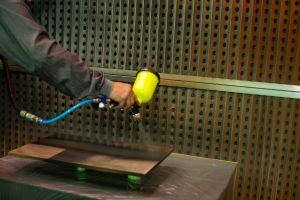
- Difficulty in atomization: More viscous inks require higher pressure on the ppainting pictures to be sprayed correctly. If the adjustment is not precise, the finish may have the undesirable "orange peel" effect.
- Waste of material: Many operators try to compensate for the density by adding more solvent. However, excessive dilution alters the chemical composition of the paint, reducing the gloss and durability of the final coat.
2. The Challenge of Drying and Curing: Why doesn't the paint dry?
|
Weather conditions
|
Effect on the Process
|
Consequence in Production
|
|
Low Temperature
|
Delay in solvent evaporation
|
Increased waiting time between coats
|
|
High Humidity
|
Air saturation (makes it difficult for water/solvent to escape)
|
Risk of runoff and loss of adhesion.
|
|
Dew Point
|
Moisture condensation on the cold surface.
|
Appearance of bubbles and future detachment.
|
When the paint doesn't dry in the expected time, the production line flow is interrupted. Parts remain idle, taking up space in the booth or on the stands, preventing the next batch from being painted. This creates the well-known production "bottleneck".
3. Risks of defects and rework
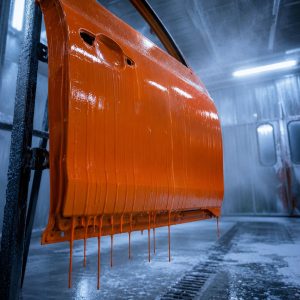
- Runoff: Because the ink takes longer to "set" (lose its initial fluidity), it tends to run on vertical surfaces;
- Boil: If the part is placed in a very cold oven or if the solvent is trapped by the low external temperature, the solvent may "boil" as it tries to escape quickly, creating small holes on the surface.
How to maintain productivity on cold days?
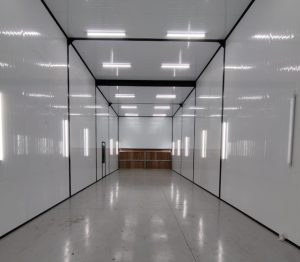
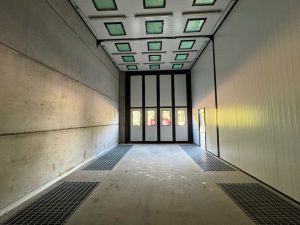
To overcome the challenges of winter, the solution lies in rigorous control of the environment and materials. The use of booths equipped with air heating systems is essential to maintain a constant internal temperature, ensuring that drying occurs within the expected time, regardless of external conditions.
Another efficient solution to speed up the process is the use of localized heating technologies, such as infrared panels. Unlike a complete climate-controlled booth, these devices focus the heat directly on the part, allowing for fast and controlled drying, which is ideal for maintaining the pace of production without relying exclusively on the thermal conditions of the warehouse.
Benefits of a warm environment for painting.
Speak to our experts. Discover how heating technologies can transform your results.