Choosing the right paint booth plays a crucial role in the quality of the finish across various industrial sectors.
In this article, we will explore in detail the nuances between positive and negative pressure paint booths, revealing their operations, advantages, and where they are applied.
Let's discuss how air pressure inside these cabinets plays a crucial role in maintaining clean environments, preventing contamination, and conserving resources. By understanding the distinctions between these systems, you will be better prepared to make informed decisions about which one meets your specific needs.
Positive Pressure Paint Booth
Operation
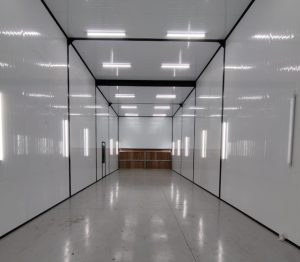
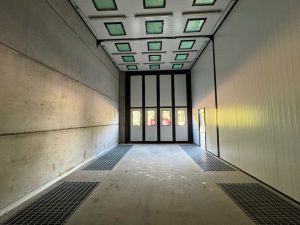
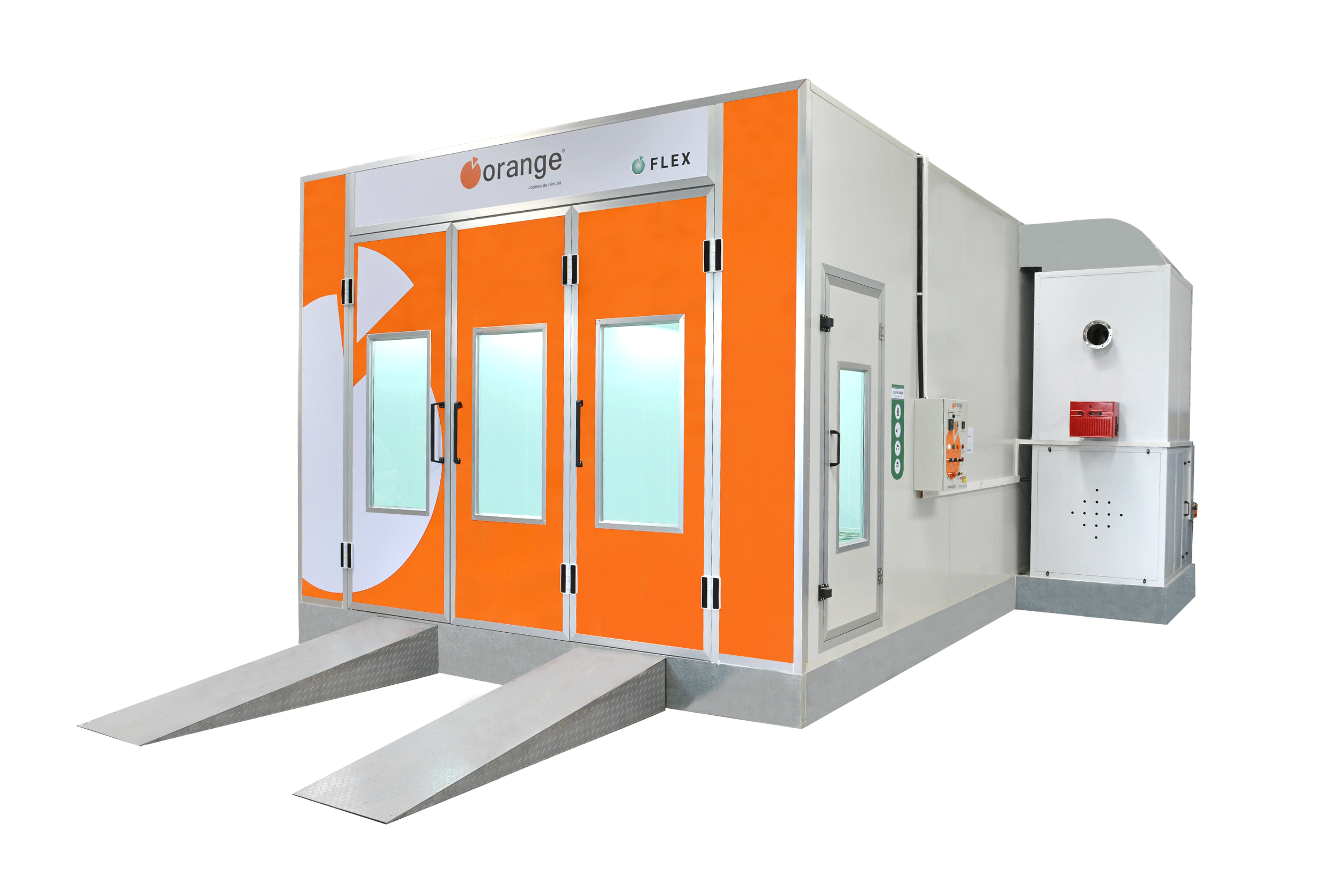
To the positive pressure paint booths They operate on a fundamental principle: air is blown into the booth in a homogeneous and constant manner, creating an internal pressure greater than the external pressure. This increase in internal pressure is what gives them the name "positive pressure." Although we don't feel this pressure while inside the booth, it plays a fundamental role in creating an airtight environment that prevents the entry of external contaminants, providing ideal conditions for painting.
Filtration
One of the notable advantages of positive pressure paint booths is their advanced filtration system. Air drawn from the outside environment passes through two filtration barriers before entering the booth. The pre-filter retains larger particles, while the second barrier, the plenum filter, is designed for microparticles that could compromise paint quality. This double filtration barrier ensures that the incoming air is free of particles, minimizing the presence of residues and impurities that could affect the final paint result.
Clean environment
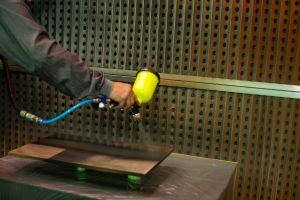
The ability of positive pressure booths to maintain a completely decontaminated painting environment is one of their greatest advantages. The constant pressurization of the booth ensures that any suspended particles, including overspray generated during paint application, are immediately directed to the purification filters.
Furthermore, when one of the booth doors is opened, air is pushed out, preventing impurities from entering and keeping the work area as clean as possible. This feature is particularly valuable in industries where precision and paint quality are paramount, minimizing rework and ensuring a flawless finish.
Painting with different colors
One of the benefits of positive pressure paint booths is the ability to paint different parts with distinct colors without the risk of cross-contamination. This means you can bring several parts of different colors into the booth and paint them without worry. The positive pressure and advanced air filtration ensure that paint particles or residue do not mix, preserving color integrity and avoiding the need for extensive cleaning between color changes.
Ideal for large pieces.
Positive pressure booths excel when it comes to painting bulky parts. The positive pressure ensures that, regardless of the location in the booth, the distance traveled by the overspray (excess paint) to the filters is the same.
This is crucial because, in other negative pressure models, it's necessary to position the parts closer to the exhaust to achieve similar results. This makes these booths the ideal choice for sectors dealing with painting large parts, providing a uniform environment for all stages of the process.
Economy
The combination of advanced filtration, a clean environment, and operational efficiency results in substantial savings. Positive pressure booths minimize rework, save time and resources, and ensure a flawless finish. The quality of the final finish is exceptional, reducing the need for touch-ups and consequently saving resources. This type of savings has a significant impact on company operations, improving productivity and the quality of the final product.
Negative Pressure Paint Booth
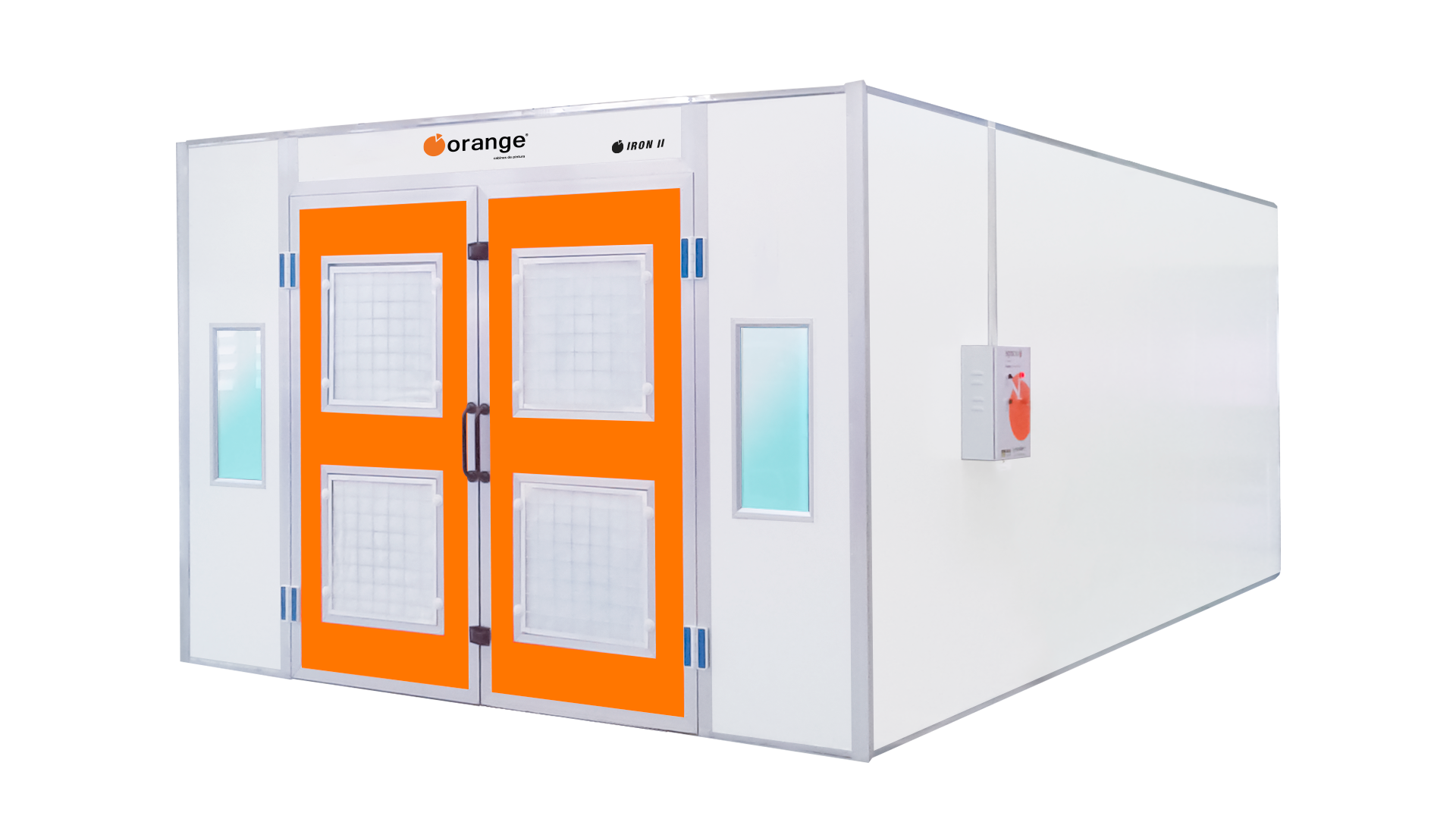
Operation
Negative pressure paint booths operate on a fundamental principle: they are used to prevent contamination from external environments. Unlike positive pressure booths, which blow air inside, negative pressure booths operate by creating a vacuum, where the pressure inside is lower than outside.
This method is fundamental in environments where it is essential to prevent the spread of contaminants. Negative pressure retains any contaminating agent inside the cabin, preventing it from spreading and ensuring a controlled environment.
Filtration
The efficiency of filtration in negative pressure paint booths is one of the critical elements for maintaining controlled environments. The exhaust system is equipped with efficient filtration, ensuring that the exhaust air is completely free of contaminating particles.
Local exhaust ventilation system
The local exhaust ventilation system is a specific application of negative pressure cabins. This system is designed to capture specific substances at a point of origin and prevent their dispersion into the surrounding environment.
This keeps the work environment safe and prevents exposure to hazardous chemicals. In short, a local exhaust ventilation system is a vital contamination control strategy in environments where safety is a priority.
To learn more about paint booths, their main models and advantages – as well as other content about painting and finishing – access the rest of our website. blog, always with new and exclusive content.