Dry paint booth vs. water curtain: which to choose based on technical, sectoral, environmental, and cost criteria.
Choose between Dry paint booth vs. water curtain This directly impacts the quality of the finish, operational costs, and environmental compliance of your company. The decision varies depending on the sector, production volume, and available space. In this practical guide, you will find objective criteria to compare technologies, understand advantages and disadvantages, and make a safe decision for your business.
Understanding the differences between a dry paint booth and a water curtain paint booth.
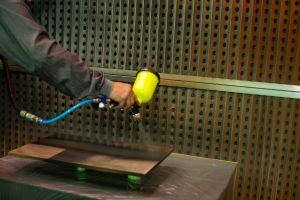
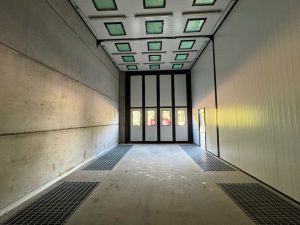
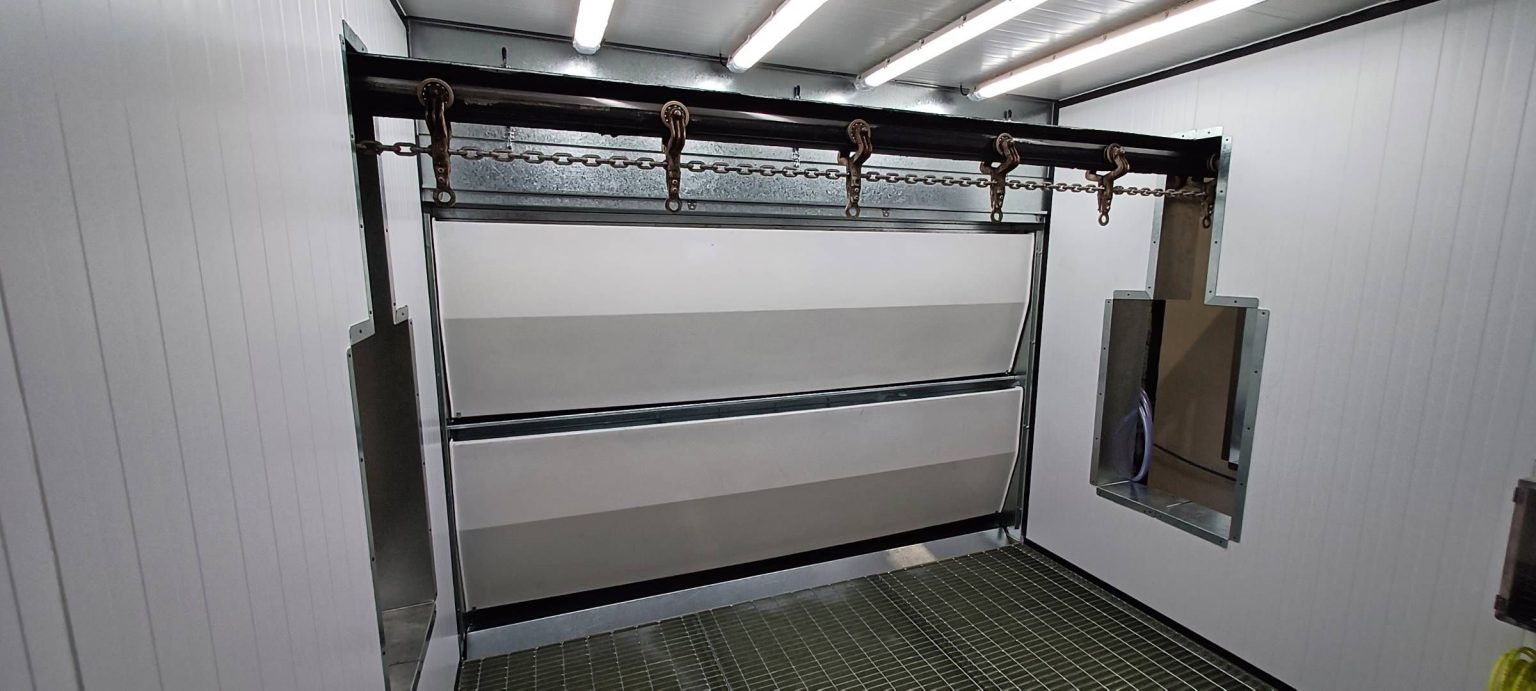
Before deciding, it is essential to understand how each system works. In dry paint booth, In this system, air contaminated with overspray passes through mechanical filters (usually filter pads or cartridges) that retain the paint particles, returning clean air to the environment or to the exhaust duct. cabin with water curtain, A continuous sheet of water captures the overspray, which is subsequently decanted and treated. This reduces filter saturation but requires a hydraulic system, pumping, a settling tank, and effluent treatment.
From a technical standpoint, a dry cabinet is usually simpler to install, while a water curtain tends to offer greater particle retention capacity in processes with very high overspray loads. The choice between Dry paint booth vs. water curtain: which to choose? This involves analyzing production volume, type of ink, legal requirements, and available physical space.
Advantages and disadvantages of water curtain and dry spray booths.
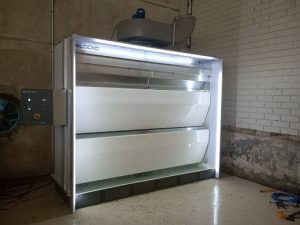
When evaluating the Advantages and disadvantages of a water curtain paint booth. Compared to dry spray booths, it's helpful to separate them into four main categories. Technically, dry spray booths require regular filter changes but have fewer mechanical and hydraulic components, reducing points of failure. Water curtain spray booths, on the other hand, handle large volumes of sprayed paint better, reducing the frequency of filter cleaning stops, but require more attention to the pump, spray nozzles, and sludge control.
In the economic sphere, the Cost of installing a dry paint booth versus a water curtain booth. The cost of water curtains tends to be lower for dry systems in small and medium-sized operations, as they do not involve complex hydraulic piping, settling tanks, and water treatment. However, in large automated lines with high production rates, water curtains can become more competitive in total cost of ownership by reducing downtime and productivity losses.
In the environmental sphere, the Environmental efficiency and water consumption of a cabin with a water curtain. This needs to be carefully evaluated, as water use and effluent generation require licensing and proper treatment. Dry cabinets, on the other hand, shift the environmental impact mainly to the proper disposal of contaminated filters. Finally, in terms of maintenance, dry cabinets require scheduled filter changes and fan inspections, while water curtains require tank cleaning, algae control, pH correction, and handling of coagulants and flocculants.
Technical differences: filters and ventilation; dry cabin and water curtain.
To the Technical differences between filters and ventilation, dry cabin and water curtain. These factors directly influence finish, safety, and costs. In dry booths, system efficiency depends on the correct sizing of the fans, the air velocity in the painting zone, and the available filter area, generally composed of pre-filters, ceiling filters, and floor filters or cartridges. Pressure drop increases as the filters saturate, requiring monitoring with differential pressure gauges to maintain the velocity within recommended limits and avoid turbulence that could compromise the finish.
In cabins with water curtains, the ventilation system needs to be sized in conjunction with the hydraulic system, ensuring that the air velocity carries the overspray to the water layer without causing splashing. This requires exhaust fans sized to compensate for pressure drop in the wet plenum and ducts, as well as ensuring access for periodic cleaning. In both cases, airflow control, external air renewal, and pressurization of the environment are critical to reduce dust contamination and ensure thermal comfort for the operator. These technical characteristics should be analyzed along with economic criteria to decide between Dry paint booth vs. water curtain: which to choose? in each application.
Conclusion
In comparison Dry paint booth vs. water curtain: which to choose?, There is no single answer, but a set of clear criteria. Production volume, type of paint, environmental requirements, budget, space, and desired level of finish define the best technology for each sector, from automotive bodywork to the aeronautical industry. When planning your project, consider solutions developed by experts such as [Company Name]. KORIA, which integrate ventilation, filtration and safety engineering, and schedule a technical consultation to discuss your specific scenario and identify the most efficient and sustainable cabin configuration for your business.