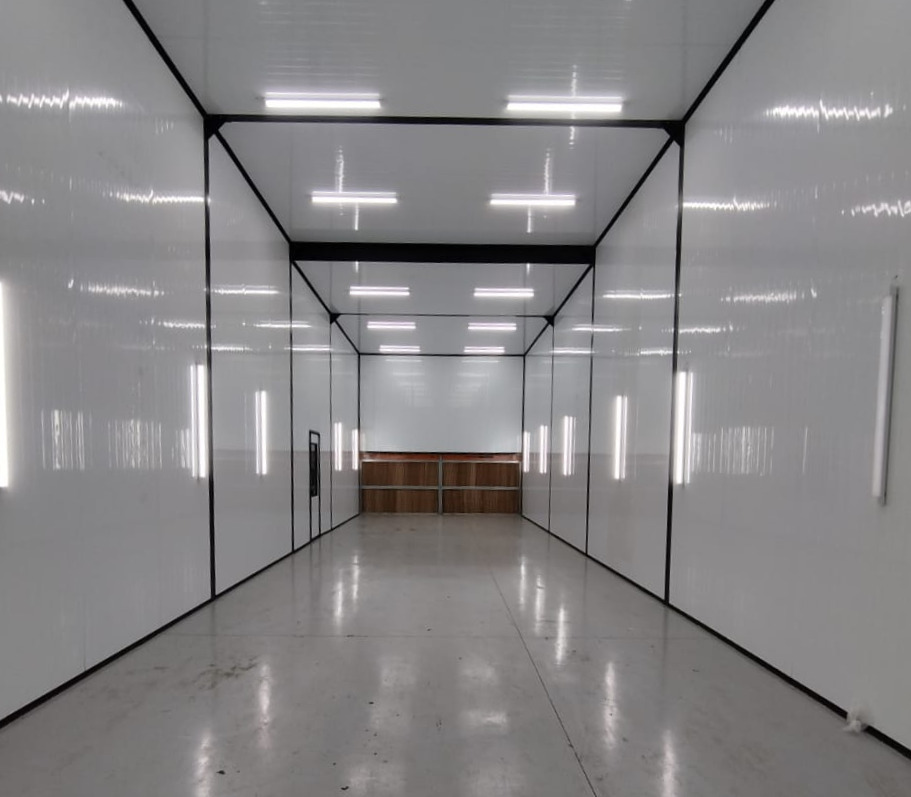
Every transport company that operates an old paint booth comes to the same question: to make a paint booth retrofit Should you build an existing cabin or invest in a new one? In short: retrofitting makes more sense when the existing structure is still solid and the problem is concentrated in specific systems, such as exhaust or filtration. A new cabin is justified when the structure is already compromised, production volume is going to grow, or the cost of corrective maintenance already exceeds that of a permanent solution.
When retrofitting makes sense.
- Civil structure (walls, roof, foundation) intact;
- Problem concentrated in 1-2 systems – exhaust, filters, control panel;
- Production volume is stable, with no growth expected in the short term;
- Operational downtime restriction;
- The budget is close to the cost of a new cabin.
When is it more worthwhile to invest in a new cabin?
- The civil structure already shows signs of corrosion, water infiltration, or fatigue;
- Expectations are high for increased volume in the coming months;
- The physical layout prevents full compliance with environmental licensing requirements;
- Recent corrective maintenance costs are now close to the price of a new cabin.
Alessandro Diebold, commercial manager of the automotive sector at Koria, highlights some points that need to be taken into consideration when replacing or adapting the cabin. “Very old equipment, especially electronic ones, don't have the same energy efficiency as current equipment; consumption is higher. And today we can do the same work in a smaller space than was necessary before. Sometimes current solutions cost less than the original investment of the cabin being used, and also improve process time and efficiency,” he explains.
The link with environmental enforcement
For fleets, this decision almost always stems from the same trigger: a substandard cabin, whether due to insufficient exhaust, inadequate filtration, or incorrect licensing, exposes the company to fines and shutdowns. In both scenarios, the starting point is the same: a technical diagnosis that shows exactly where the cabin deviates from what the inspection will check. It is this diagnosis that determines whether retrofitting solves the problem or if the structure can no longer withstand repairs.
“We look at the client's needs and pain points, and try to fit them into the most technically suitable solution. A cabin isn't a structure where the lowest price is the right solution. The project has to be well-suited to the operational needs. We organize a scope that is as accurate as possible, within the available investment and within the solutions we have. The two points must be as balanced as possible,” says Alessandro.
Conclusion
There is no single answer between retrofit and new cabin; it all depends on the condition of the structure, the size of your fleet, and how far the cabin is from environmental compliance. Koria experts They can assess your operation and indicate the path with the least risk.