Fume extraction from welding is a mandatory topic in any manufacturing process that works with piping, metal structures, tanks, boilers, or welded parts – and, despite being so common in everyday factory operations, it continues to be underestimated.
The particles generated during welding, mainly in processes using coated electrodes, flux-cored arc welding (FCAW), and gas metal arc welding (GMAW), are extremely small, between 1 and 2 micrometers when agglomerated. At this size, they do not remain in the nose or throat: they penetrate deep into the respiratory system and accumulate over time. Among the most critical substances present in these fumes are hexavalent chromium and manganese, both with very restrictive occupational exposure limits due to their carcinogenic and neurotoxic potential.
In other words, it's not a matter of discomfort, it's an occupational health issue with consequences that appear years later, which makes the capture of welding fumes even more important, since the damage is often only noticed when it's too late.
What do the Brazilian Regulatory Standards (NRs) require regarding welding fumes?
Exposure to welding fumes is regulated by a set of Regulatory Standards Things that every company that welds in a factory environment needs to know:
NR-9 – Assessment and Control of Occupational Exposures to Physical, Chemical, and Biological Agents. This standard defines what counts as an environmental risk in the workplace, including dust, fumes, mists, and gases. Since the 2022 update, NR-9 has ceased to be an isolated "program" (the former PPRA) and has become the technical assessment methodology that feeds into the PGR (Risk Management Program), now mandatory under NR-1.
NR-15 – Unhealthy Activities and Operations. It defines the tolerance limits for substances present in welding fumes. Exceeding these limits is not just a compliance issue; it's what classifies the activity as hazardous, directly impacting the additional pay owed to the worker and increasing the risk of labor liabilities.
NR-6 – Personal Protective Equipment. Here is the most important and most misunderstood point: the standard establishes a clear hierarchy. First comes the Collective Protective Equipment (CPE); Personal Protective Equipment (PPE) only comes into play when the CPE is demonstrably absent or ineffective. In practice, this means that relying solely on a welding mask does not meet the standard and, moreover, field experience shows that a mask alone does not solve the problem because it does not eliminate environmental exposure, it only filters what has already reached the welder.
Why fume extraction at the source is the solution that works
A single welder generates between 20 and 40 grams of airborne particles per hour, which can amount to 35–70 kg per year of particulate matter circulating in the factory environment. This volume is sufficient to mean that any solution based solely on PPE (Personal Protective Equipment) simply cannot cope.
The engineering logic behind NR-6 is precisely to capture the fumes as close as possible to the source, before they disperse and reach the breathing zone of those who are welding and those working nearby. A good natural ventilation design combined with localized exhaust drastically reduces the concentration of particles in the air, protecting not only the welder but the entire factory environment.
Two ways to apply welding fume capture in practice.
Depending on the manufacturing layout and how the welding work is carried out, the capture of welding fumes can be addressed in different ways:
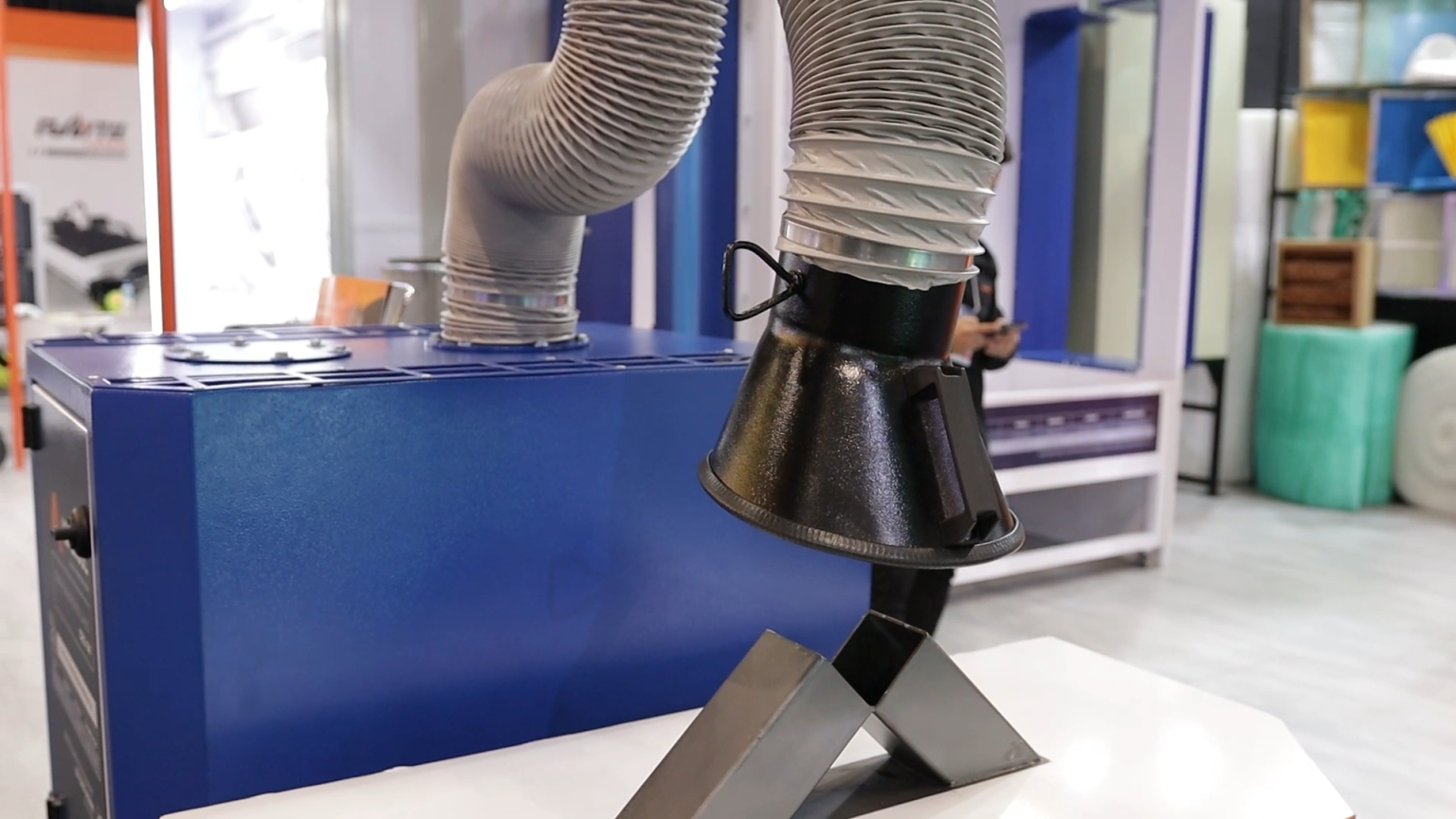
When welding occurs at fixed or isolated points., In areas such as work cells or hard-to-reach spaces, portable equipment that is easy to position and reposition as needed makes sense. This is the case with... CEG Model, Available in CEG-1M and CEG-2M versions, with a self-cleaning cartridge filter and quick deployment, it was designed for operations that do not require large structural investments, but cannot compromise on compliance.
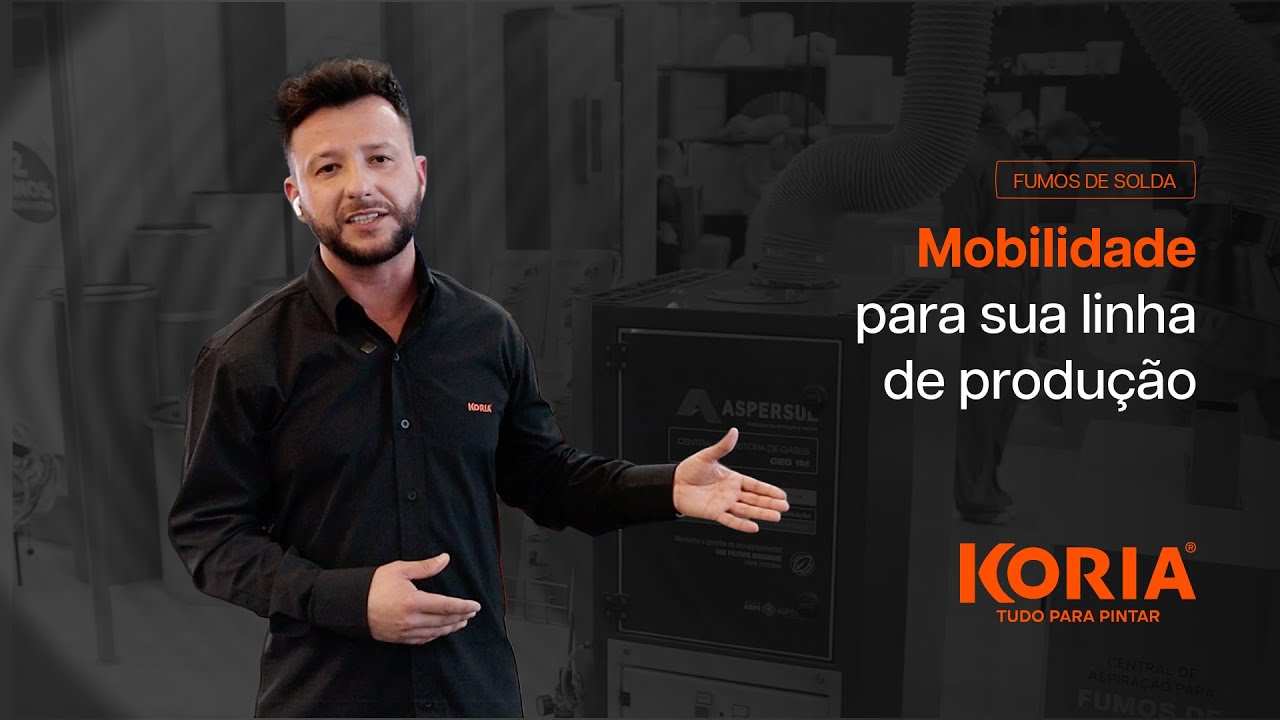
When the welder moves around the factory or the power source needs to reach more distant points, However, the ideal solution changes: more reach and flexibility are needed. That's where... ECO Model, with automatic pulse jet filtration and the possibility of connection to extension lances and articulated arms, expanding the collection radius without losing efficiency or requiring constant maintenance.
Complying with NR (Brazilian Regulatory Standard) is not a cost, it's protection.
It's common to hear that investing in workplace safety "is expensive." But the calculation changes when you look at the other side of the equation: non-compliance with the NR standards can lead to fines from the Ministry of Labor, the embargo or closure of equipment and worksites, retroactive hazard pay, labor and civil lawsuits, and, in cases of serious accidents, even criminal liability.
Investing in welding fume capture systems is not just about complying with regulations. It's about reducing the company's legal risk, protecting the health of those who work with welding every day, and preventing a silent respiratory problem from becoming, years later, a liability far more expensive than the initial investment.