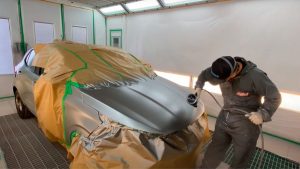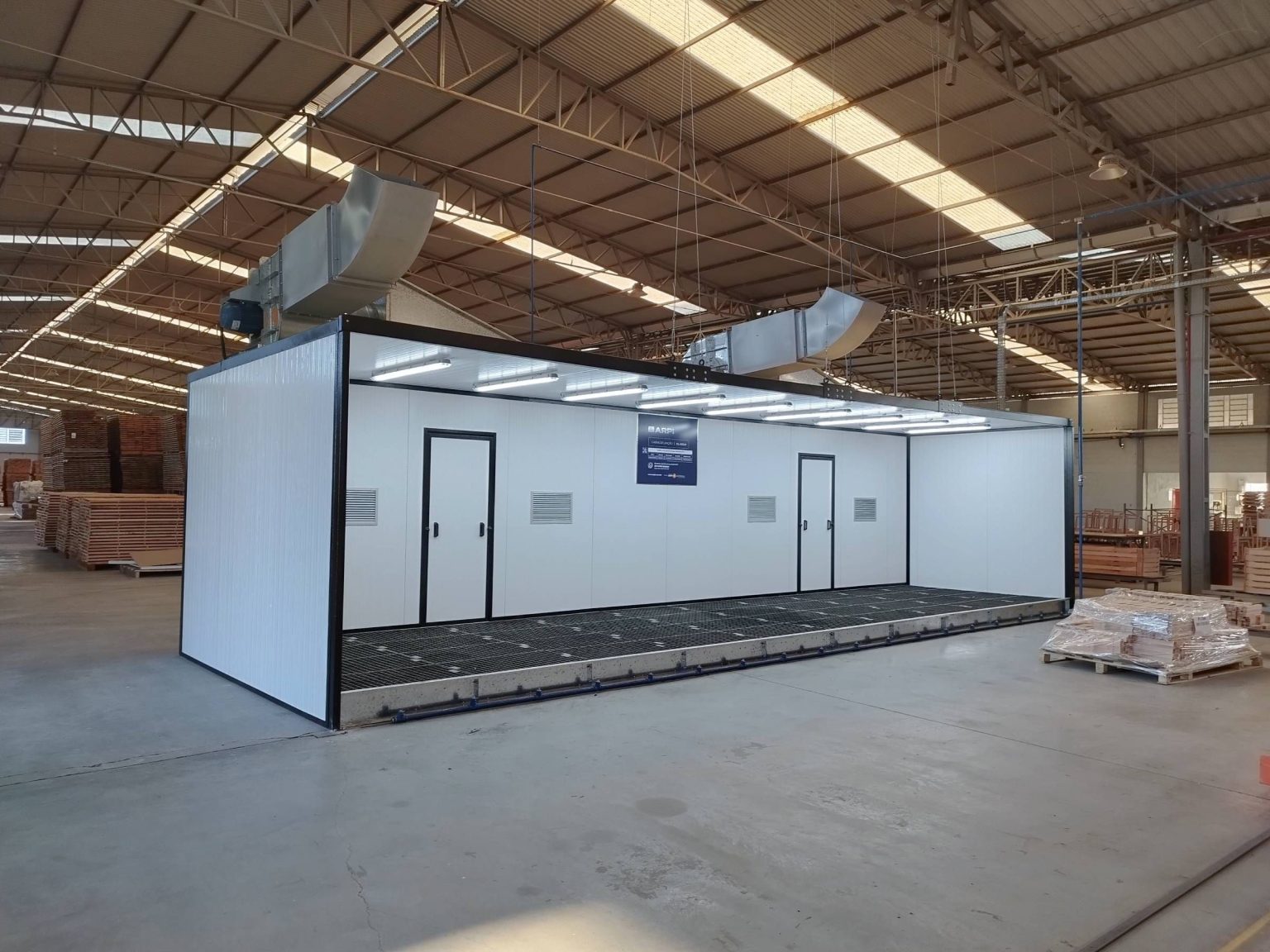
For any company that works with finishing, proper preparation of parts before painting is a fundamental step to guarantee the final quality of furniture, decorative objects, and pieces. The sanding booth plays a crucial role in this process, providing a controlled and efficient environment for carrying out this step.
Sanding booths are essential equipment in various industrial sectors, performing the primary function of vacuuming and retaining the dust generated during the sanding process. This task is especially important in environments where sanding is a frequent step, such as in the furniture, fiber and plastic, and metallic and ferrous materials industries.
In this article, we will list some important tips for choosing a sanding booth, regarding size, types of processes, ventilation, and other factors.
Cabin size
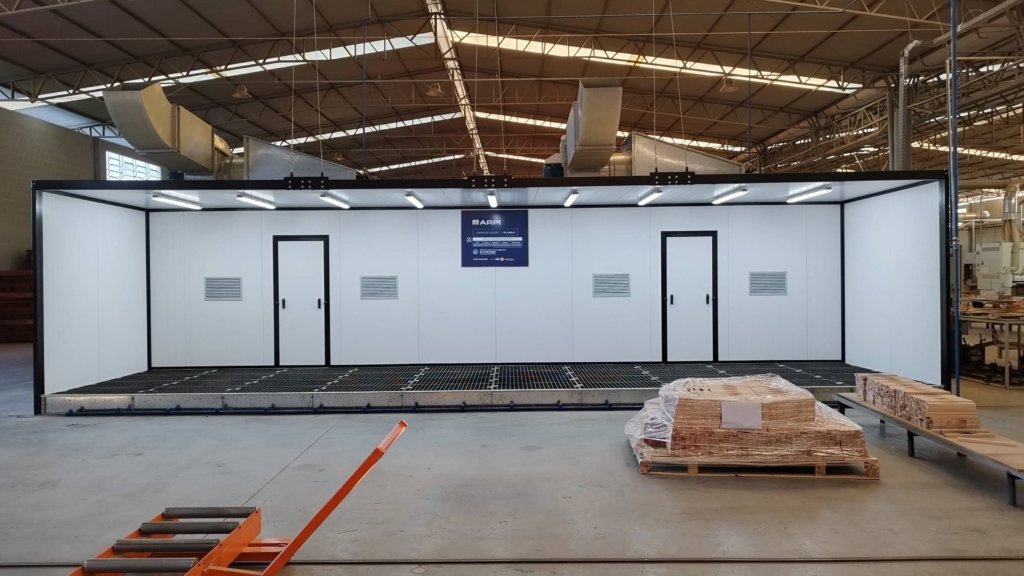
Before choosing your sanding booth It is important to assess the size of the objects or parts that will be prepared; that is, make sure the booth is large enough to accommodate the parts and the employees with good mobility.
Parts that are too large relative to the size of the booth can hinder the efficiency of the sanding and painting process. This is because it can be difficult to maneuver the parts within the limited space, making the work time-consuming and prone to errors. Therefore, it is essential that the booth be large enough to accommodate the parts properly, allowing operators to work comfortably and safely.
Accessibility is important for moving parts inside the cabin, as is checking if the cabin has doors or openings that are wide enough and a layout that facilitates access.
Types of process
The choice of sanding booth is heavily influenced by the types of processes and applications in which it will be used. Different processes and work requirements demand specific booths that meet the needs of each application.
The material of the parts to be sanded plays a crucial role in choosing the right booth. For example, the booth used for sanding wooden parts may be very different from the one needed for sanding metal parts.
The quantity and type of dust or particles generated during sanding influence the choice of booth and its filtration system. Processes that generate large quantities of particles require booths with high filtration capacity and effective cleaning systems to maintain a clean work environment.
Ventilation and filtration
To the sanding booths They operate based on an exhaust system that creates negative pressure inside. This prevents dust generated by sanding from escaping into the factory environment, keeping it clean and free of contamination. Extraction is carried out through suction planes located at the bottom, on the floor of the cabin.
Good ventilation and filtration systems are essential for removing dust particles and preventing paint contamination. Therefore, ensure that the booth has an effective dust extraction and ventilation system.
Lighting
Proper lighting is essential for identifying imperfections on the surface of parts during the sanding process. This includes scratches, scuffs, stains, and other irregularities that need to be corrected before paint application. Without good lighting, these defects can go unnoticed, resulting in lower quality products.
Sanding work requires precision, especially in industrial applications. Clear and uniform lighting allows operators to accurately see the areas being worked on, ensuring a consistent finish across the entire surface of the workpiece.
Regulations and standards
Verifying that the cabin complies with local, state, and national safety regulations and standards is crucial. This ensures that your operation meets safety and environmental standards, avoiding legal problems and risks to worker health.
To learn more about professional painting and other content related to painting and finishing, access the rest of our website. blog, always with new and exclusive content.