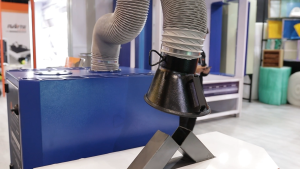
In the world of painting, the distinction between Industrial paint vs. residential paint It is crucial. Although both involve the application of paints, their purposes, processes, materials, and equipment are fundamentally different. For companies like Koria, which specializes in industrial painting solutions, it is essential to clarify these distinctions, ensuring that our clients understand the focus and differences between these segments.
What is residential painting?

Characteristics of residential painting:
- Objective: Aesthetics, renovation, basic protection;
- Environment: Interior and exterior of houses, apartments, and condominiums;
- Materials: Water-based paints, varnishes;
- Equipment: Rollers, brushes, trays, sandpaper, joint compound;
- Surface preparation: Cleaning, light sanding, application of filler and sealant;
- Durability: Moderate, requiring touch-ups or repainting every few years.
What is industrial painting?
Characteristics of industrial painting:
- Objective: Corrosion protection, chemical and mechanical resistance, extreme durability;
- Environment: Factories, warehouses, machinery, heavy equipment, metal structures, pipelines, tanks, vessels, industrial vehicles;
- Materials: Epoxy paints, high-temperature paints, anti-corrosion primers, high-performance coatings;
- Equipment: Shot blasting machines, industrial compressors, spray guns, curing ovens, compression pumps;
- Surface preparation: Abrasive blasting, chemical treatment, phosphating, thorough cleaning to remove oils and contaminants;
- Application: Multiple layers with controlled thicknesses, oven curing, electrostatic application for uniformity;
- Durability: Elevated, designed to withstand decades in harsh conditions.
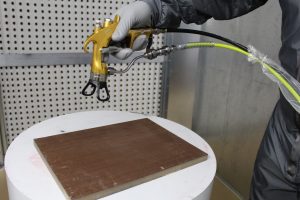
It is crucial to emphasize the complexity and cost of the equipment used in Industrial paint vs. residential paint The differences are drastically different. While residential painting benefits from more accessible and general-purpose tools, the industrial segment demands high-performance machines, advanced technology, and a significantly larger investment. Many customers, when seeking solutions for their homes, may encounter the robustness and added value of industrial equipment, which is designed for specific production and durability demands, and may not be entirely suitable or economically viable for domestic applications.