Working with automotive or furniture painting has its daily challenges, including dust, wind, and the strong smell of paint. To overcome these obstacles, many professionals, in an attempt to improve conditions, end up setting up their own "booths" with tarps, adapted fans, and a household exhaust fan.
The intention is good. But in practice, these makeshift structures don't control the air, don't filter particles, and end up harming the paint job and the health of those who work there.
The paint spreads around the room, sticks where it shouldn't, and the end result never turns out as expected.
Therefore, understanding how a real paint booth works is the first step to saying goodbye to improvisation and starting to work with more quality, safety, and efficiency.
What is a paint booth?
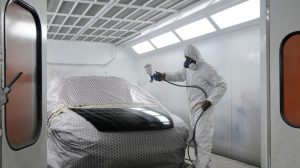
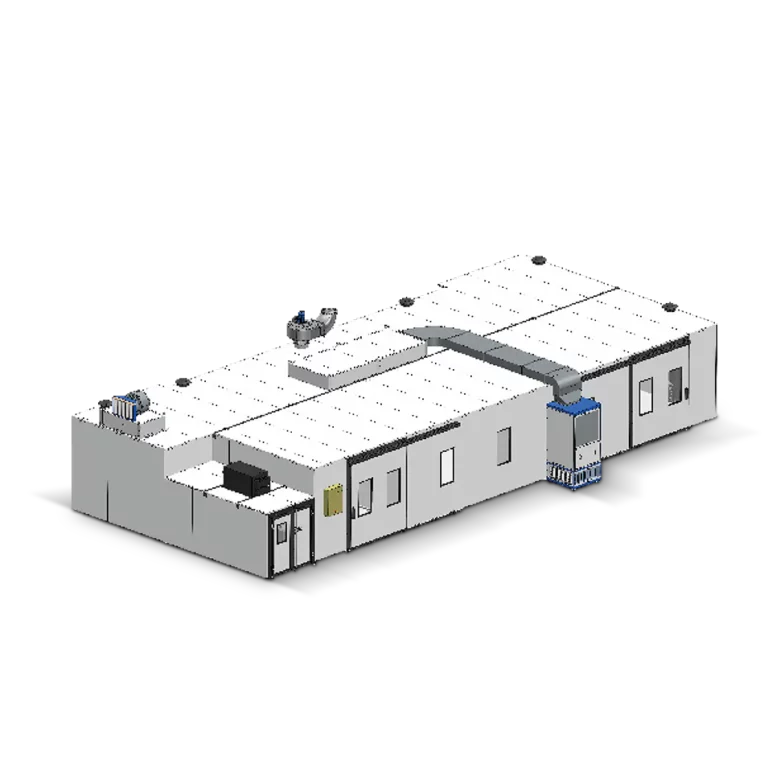
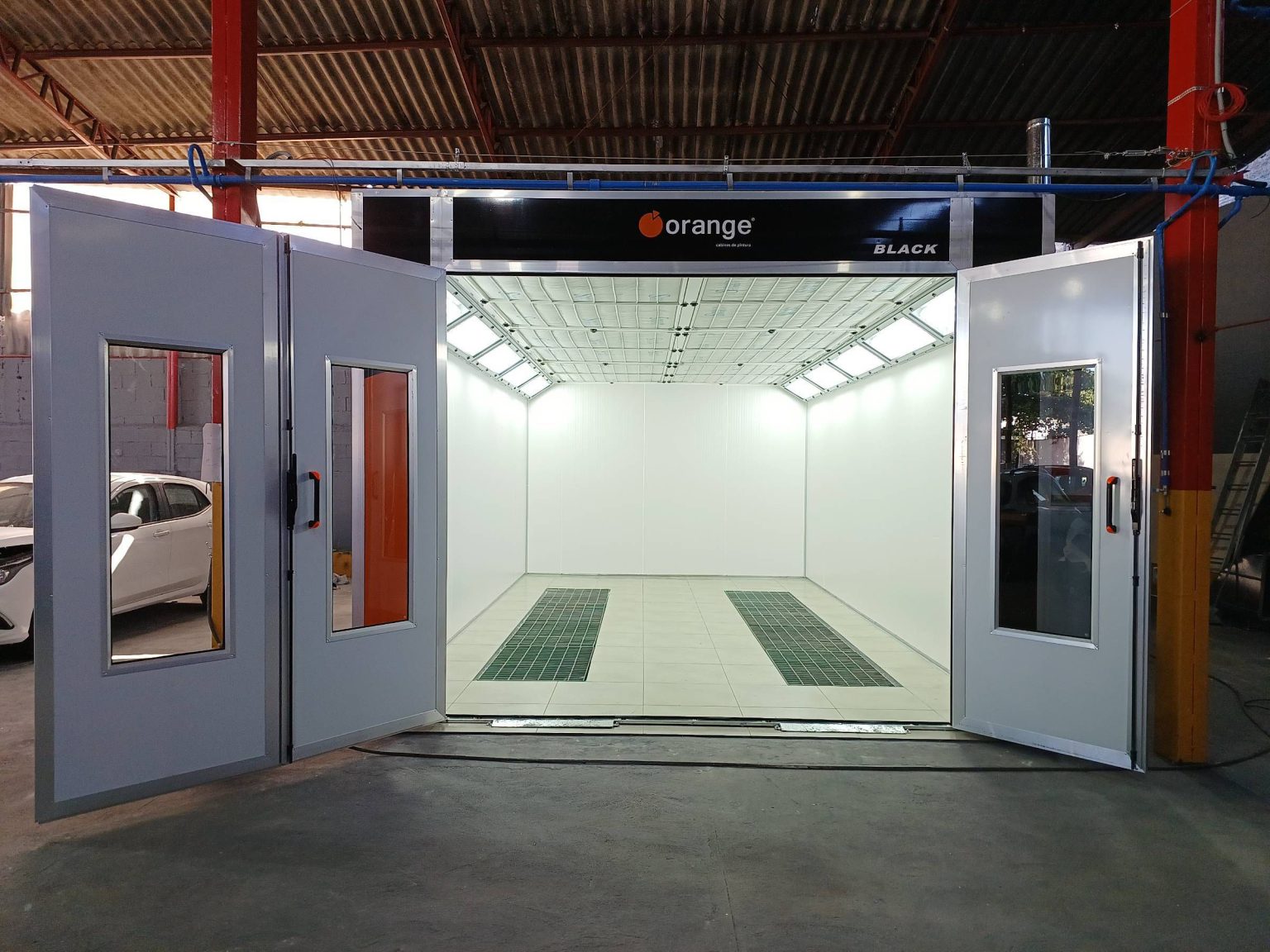
A paint booth is basically a closed and controlled environment, created to ensure that the air circulates correctly during painting. It is designed to keep the environment clean, prevent dust from entering, and eliminate excess paint in the air (overspray).
Inside a booth, air enters and exits in a planned way, preventing the paint from spreading and ensuring that the product reaches the surface of the piece evenly.
There are various types of booths, but they all have the same goal: to guarantee a clean, shiny, and durable finish.
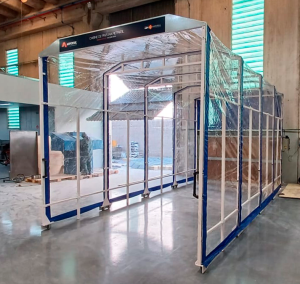
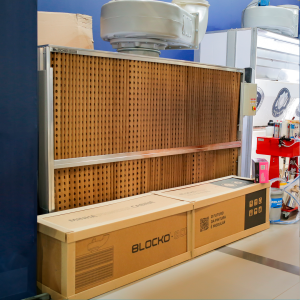
A good example is BLOCKO® BOX, An entry-level booth designed for those starting out in professional painting. It demonstrates, in practice, that having the right equipment isn't a luxury, it's the beginning of a job well done.
How air circulates inside the cabin
The secret of the cabin lies in how the air moves inside it. Simply put, the process works like this:
Clean air enters through the top or side of the cabin. It circulates in a controlled manner over the part, creating a constant and gentle flow.
Dirty air is drawn in by exhaust fans installed at the rear or bottom. Before being returned to the environment, this air passes through filters that capture paint and dust particles.
This continuous movement removes excess paint (overspray), leaving only what should actually adhere to the piece.
Thus, the result is a more uniform paint job, without blemishes, bubbles, or roughness. And it is precisely this controlled air circulation that differentiates a professional booth from an improvised structure.
The role of filters in painting.
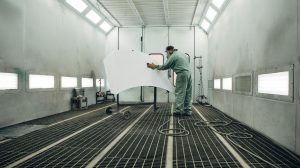
Filters are the heart of the booth. They are responsible for keeping the air clean both at the inlet and outlet. Inlet filters purify the air coming from outside, preventing dust and particles from entering the painting environment. Outlet filters retain paint overspray before the air returns to the environment. When filters are clean and properly installed, air flows correctly. But when they are improvised or poorly positioned, the air stops circulating and the paint job is compromised, resulting in stains, dirt on the surface, and even color flaws. Taking care of the filters means taking care of the quality of the service and the health of those working there.
What happens when air doesn't circulate properly?
In makeshift cabins, airflow is disorganized, which causes a number of problems:
- The overspray remains suspended in the air and then settles back onto the part;
- The operator breathes in chemical particles, harming their health;
- The room ends up smelling strongly, with stained walls and accumulated dust;
- Rework becomes constant, wasting time and materials.
That's why setting up a "homemade" booth almost never pays off. Without airflow control and proper filtration, the result is a dirty environment and a flawed paint job. A professional booth, on the other hand, maintains clean and constant air, and that makes all the difference in the final quality.
Compliance with environmental standards
Regulatory bodies, such as the National Environmental Agency (in Brazil), establish strict standards for controlling emissions in industrial processes, including automotive painting. Therefore, companies that use paint booths ensure they comply with these standards, avoiding fines and environmental sanctions. In this way, compliance with environmental regulations improves the company's reputation, demonstrating a commitment to sustainable practices.
Why a well-designed cabin is a smart investment.
Many professionals believe that a paint booth is expensive or unnecessary, but the reality is the opposite. It saves time, paint, and rework. With a well-designed booth, the painter works more comfortably, more safely, and more efficiently. The investment pays for itself over time because the work becomes more productive and the results are much better.
Entry-level models, such as BLOCKO® BOX, These solutions were created specifically for that audience, those who want to move beyond improvisation and start professionalizing their work environment with a simple, functional, and efficient system.
Air is the secret to a perfect painting.
Many believe that the secret to painting lies solely in the paint or the spray gun, but the real difference lies in the air circulating inside the booth. It's the airflow that determines whether the paint will be deposited smoothly and evenly or if it will spread and stain the piece. A well-designed paint booth controls this flow, filters the air, and creates the ideal working environment. Understanding this is the first step to moving beyond improvisation and beginning a new phase: that of professional, clean, and safe painting.
Did you like this post? Share it with your friends or on social media. For more tips on painting and its equipment, visit our blog, always with exclusive content.