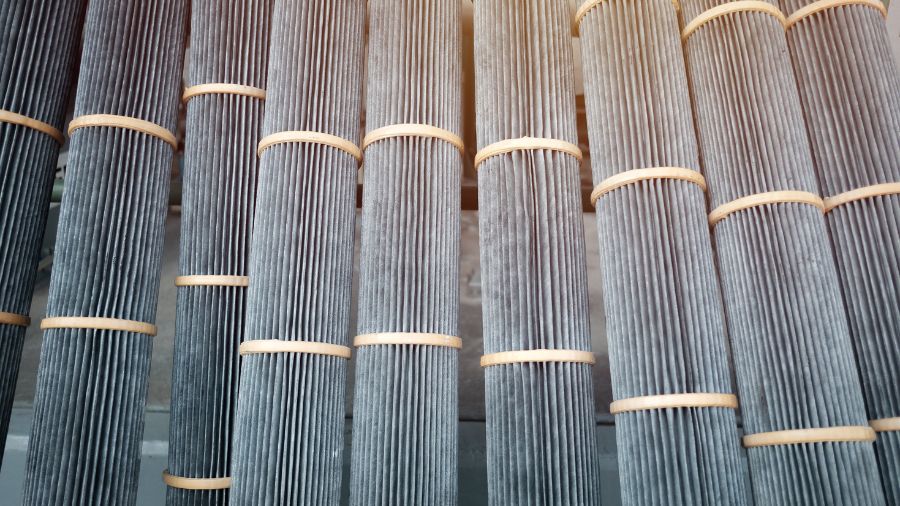
One of the best solutions for those seeking improved air filtration quality in industrial production can be found in bag filters. They are suitable for various production sectors and offer excellent cost-effectiveness. Let's learn a little more about how a bag filter works and its components.
Operation of a bag filter
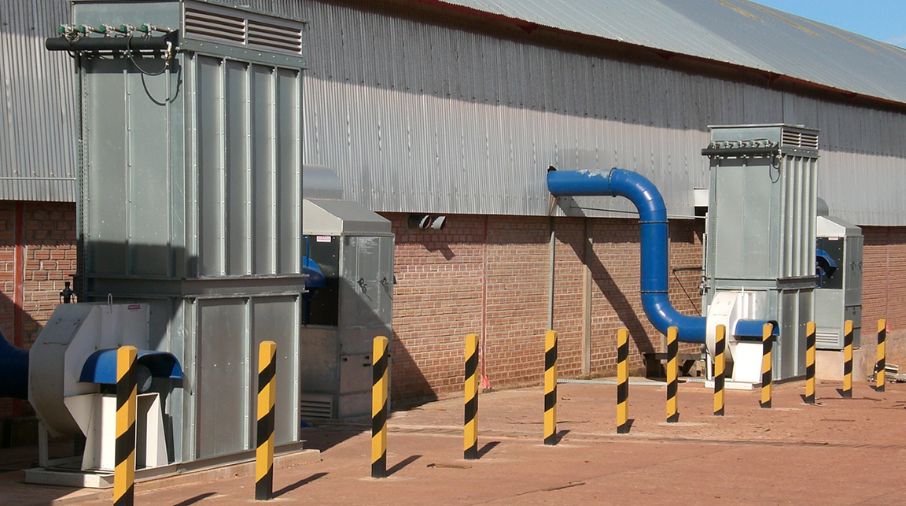
The bag filter is one of the most widely used in industry, mainly due to its cost-effectiveness. Its operation is based on filtering out impurities whose passage is prevented by the pores found within the filter.
This filter offers excellent value for money because, due to its low compressed air consumption, it uses little energy. Furthermore, it boasts a filtration rate of up to 99.9% when in good working condition.
The air filtration process in this type of filter is quite simple; it occurs through the entry of contaminated air into the bag chamber, which happens via a side duct that not only controls the speed but also redirects it.
In a second stage, the purified air flows towards the upper nozzles of the filter. It is important to note that bag filters operate under positive or negative pressure, limited by the pressure drop across the bags, since the discharge is directed towards the atmosphere.
This type of filter has several advantages, but the main one is its versatility. A good example is its operating system, in which particles are retained in the pores of the fibers and, after a certain accumulation, transform into an efficient and complementary barrier to air filtration, also known as "filter cake".
However, it is important to pay attention to cleaning the filters to ensure maximum efficiency, and this can be done in two ways: either by compressed air jets or by washing the filter bags.
One of the disadvantages of this type of filter is that it is not suitable for high-temperature applications because, due to its composition, it can be affected by sparks and other types of incidents involving the filter overheating.
Components of a bag filter
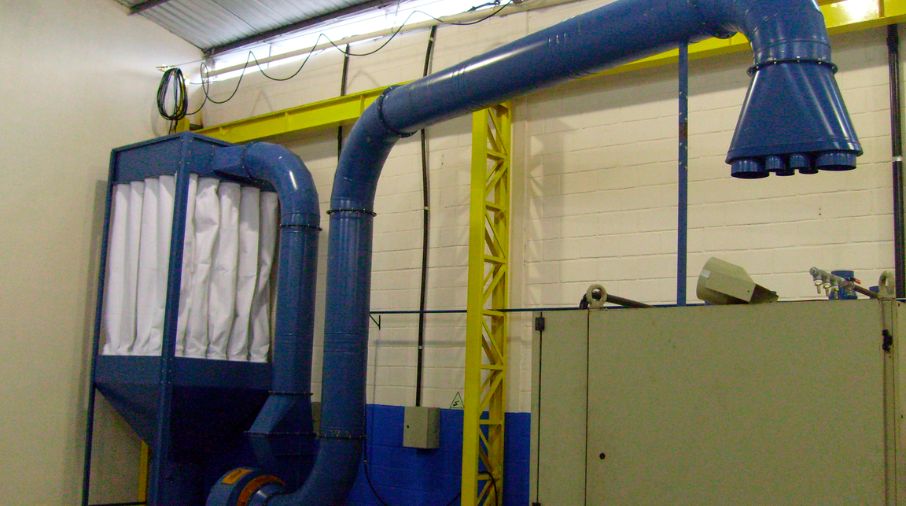
The main component is the filter bags, cylinders that allow air to pass through while retaining solid dirt particles. They are usually made of fabrics or porous ceramic materials.
Other important components are the cages, metal structures that support the filter bags and organize them into rows.
Next, we have the mirror plate, which secures the filter cages and sleeves, and the diaphragm valve (also known as a quick exhaust valve) that controls the flow of compressed air responsible for cleaning the sleeves.
Also extremely important is the compressed air reservoir, a necessary item for cleaning the filter bags. This reservoir must have sufficient capacity to ensure a constant flow of compressed air throughout the entire process.
Finally, we have the blow tubes, metal tubes that distribute and direct the jets of compressed air onto the sleeves of the same row, and the "hopper," responsible for retaining the particles that enter at high speed and collecting those that detach from the sleeves.
To learn more about filters and how other essential components in a paint booth work, visit our blog, always with new and exclusive content.