Trends in industrial painting in 2026 focusing on performance, sustainability and factory flexibility.
Industrial painting in 2026 is undergoing a transformation driven by efficiency, sustainability, and automation. Companies are seeking to reduce costs, extend the lifespan of assets, and comply with stricter environmental regulations. Understanding the key trends in industrial painting in 2026 helps maintenance, engineering, and production managers better choose paints, processes, and equipment. This includes everything from innovations in anti-corrosion coatings to new flexible layout solutions, such as retractable booths adapted to dynamic production lines.
Key trends in industrial painting in 2026
To the Industrial painting trends 2026 They combine three main pillars: anti-corrosion performance, factory productivity, and sustainability. Industries are directly linking painting decisions to asset reliability and ESG goals.
Market studies indicate annual growth exceeding 41% for industrial coatings, driven by infrastructure, oil and gas, and asset renewal. In this scenario, decisions regarding paint systems are now considering not only initial cost, but also... Cost, maintenance, and ROI of industrial painting in 2026.
In addition to new formulations, investment is growing in equipment that increases layout flexibility. Solutions such as modular booths and retractable structures allow the painting process to be adapted to smaller batches and a wider mix of products, without sacrificing overspray control and finish quality.
Sustainability and low VOCs in industrial painting
THE Sustainable and low-VOC industrial paint by 2026 This is one of the central pillars of the new environmental regulations. There is a clear shift towards water-based, high-solids systems and faster curing times, reducing solvent emissions and energy consumption.
Industries with decarbonization goals are seeking to replace systems using aggressive solvents with alternatives that meet resistance requirements. This change demands application infrastructure that effectively controls ventilation, filtration, and safety, even in already established production areas.
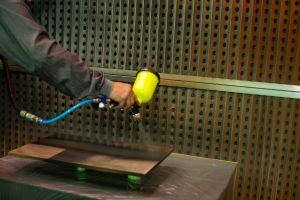
Improving overspray capture efficiency reduces paint waste and environmental contamination. Booths with dry or wet filtration help maintain air quality and facilitate compliance with environmental and occupational safety audits.
When combined with good maintenance and calibration practices for painting equipment, these solutions deliver lower consumption per square meter painted. Thus, sustainability is directly connected to competitiveness, through reduced inputs and a lower volume of waste.
Automation, robotics, and layout flexibility.
You Robotic industrial painting systems for factories. They are expanding beyond the automotive sector and reaching metalworking, machine manufacturing, and metal structure production. Automation improves repeatability, reduces finish variability, and decreases operators' exposure to paint mist.
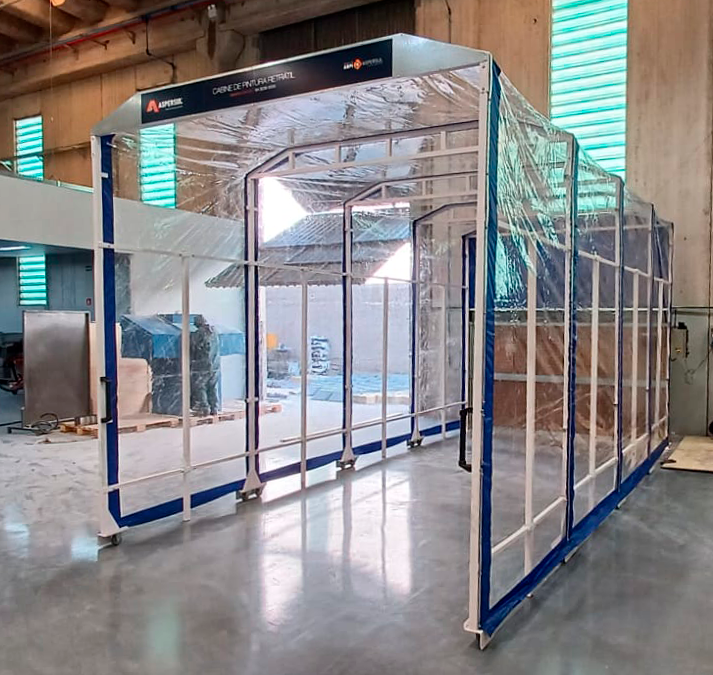
To fully utilize these systems, companies need paint booths with flexible layouts. Adjustable structures, such as fixed booths with retractable extensions or mobile booths, allow the application area to be adapted to different part dimensions while maintaining overspray control.
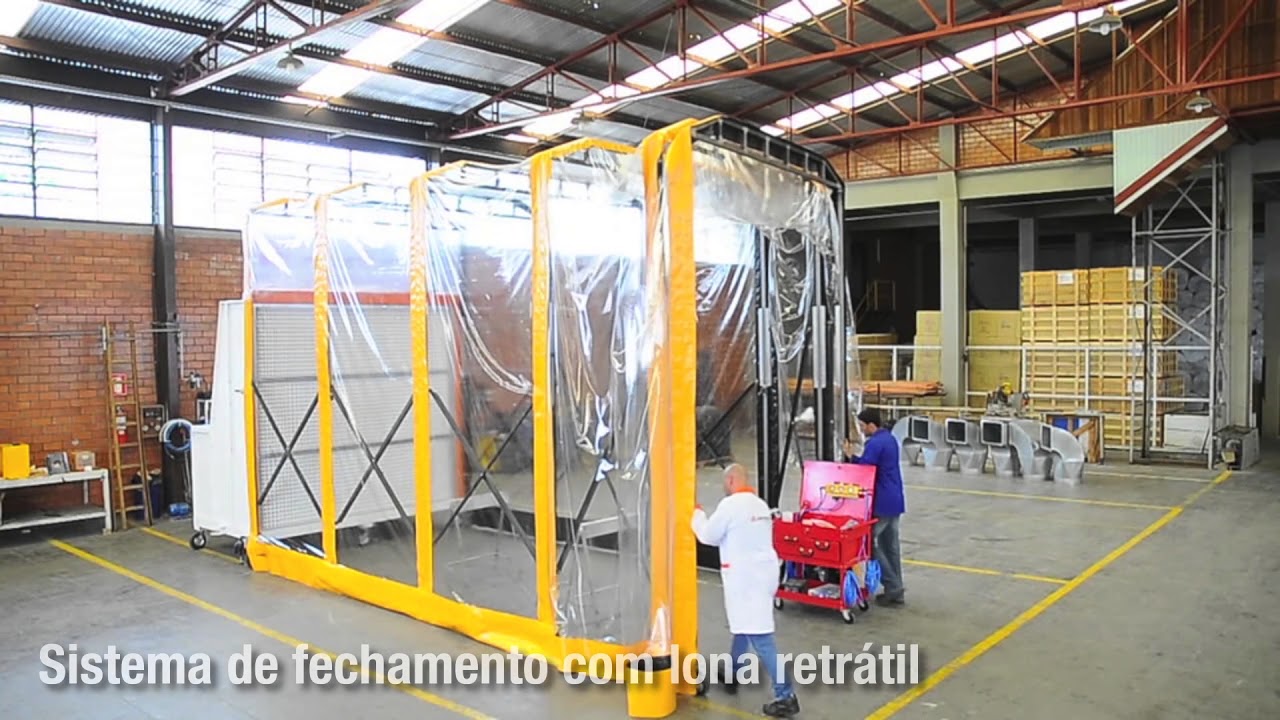
This flexibility is crucial in production models geared towards smaller batches and a wider product mix. Instead of immobilizing a large area with an oversized fixed cabin, it becomes possible to retract the structure when the process is not in use, freeing up space for other operations.
The integration between paint automation and modular equipment also facilitates future expansions. Companies can start with manual application in retractable booths and gradually migrate to robotic systems using the same exhaust and filtration infrastructure.
Surface preparation, process control and ROI
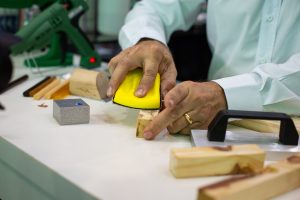
To the Best surface preparation practices for industrial painting. These factors remain critical to the final performance. Cleaning, contaminant removal, roughness profile, and moisture control directly impact coating adhesion, especially in highly corrosive environments.
By 2026, the use of digital checklists and sensors for monitoring temperature, humidity, and airflow in painting areas will increase. This data helps correlate finishing defects with process conditions, generating preventive actions and parameter adjustments.
When analyzing the Cost, maintenance, and ROI of industrial painting in 2026, Companies don't just consider the price per liter of paint. They also factor in setup time, rework rate, area occupied in the layout, filter consumption, and asset availability during repainting.
Well-designed cabins directly contribute to this ROI by reducing contamination. In retractable structures, the ability to retract the equipment when not in use frees up valuable floor space, which also generates economic returns by enabling new production flows.
Retractable paint booths as a response to new demands.
The adoption of retractable paint booths aligns with the main... Industrial painting trends 2026, especially in terms of flexibility, sustainability, and efficiency. In industrial environments with a diverse product mix, a single, fixed, and rigid solution often limits production flow.
Retractable booths can operate as a fixed painting point with retractable extension or as a mobile structure, depending on the factory's needs. This adaptability allows the painting area to adjust to the size of the part and the pace of production, minimizing bottlenecks and waiting times.
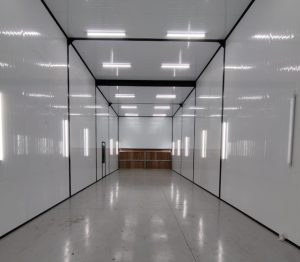
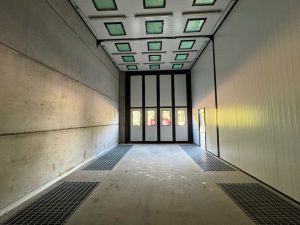
In addition to layout flexibility, these booths enable better control of overspray and contaminants, contributing to more consistent finishes. Combined with dry or wet filtration systems and good internal lighting, they facilitate visual inspection, increase productivity, and support demanding quality standards.
THE KORIA Retractable Paint Booth This is an example of this trend applied in practice. Manufactured from high-strength steel profiles and reinforced transparent canvas, it offers modular articulation, fluid movement, and optimized use of factory space, aligning innovation in industrial painting with the reality of workshops, dealerships, and industries.
Conclusion
The main trends in industrial painting in 2026 point to a scenario where performance, sustainability, and flexibility go hand in hand. More advanced coatings, low-VOC systems, automation, and smart booths improve finish quality, reduce costs, and extend the lifespan of industrial assets. In this context, solutions like KORIA's Retractable Paint Booth help companies adapt their layout, control overspray, and maintain more efficient processes. To delve deeper into these advantages, it's worth learning in detail how KORIA equipment can support your industrial painting strategy in 2026 and beyond.