Loose knots, cracks, splits, and chips are part of working with wood. In furniture factories, joinery production, or carpentry shops, the question is always the same: how to correct the defect without delaying production and without the repair being visible after finishing? The most well-known answer is wood filler. But it's not the only option.
Quick answer: Traditional wood filler works well for spot repairs, but it needs drying time before sanding. Hot repair, like the Wood Repair system, uses a stick melted by a gun that hardens as it cools. Therefore, the repair can be cut, sanded, and finished immediately afterward, which makes a difference in production environments.
What is hot wood repair?
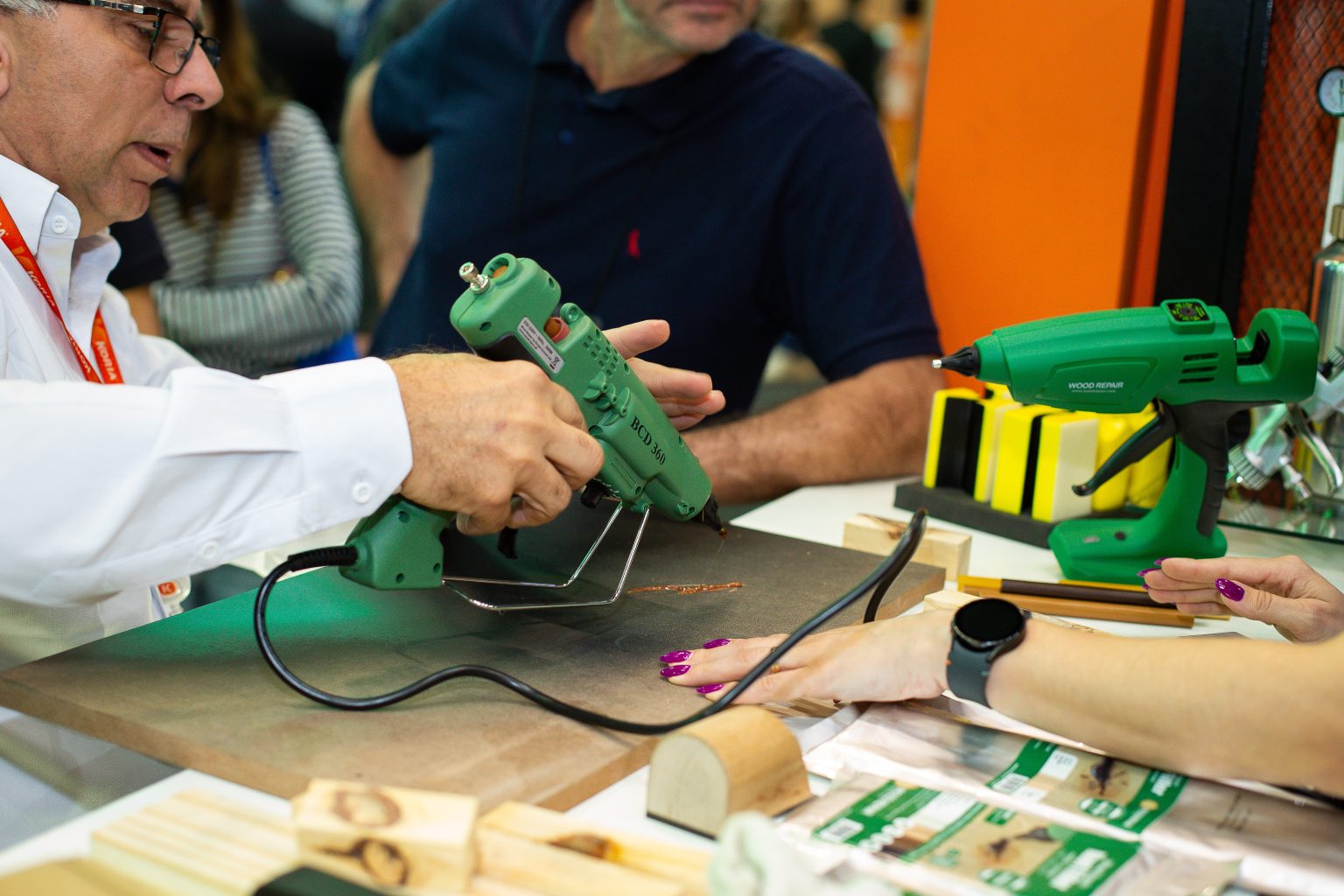
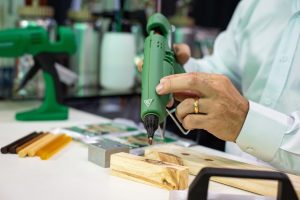
Hot repair is a filling method in which a solid rod is heated in a gun and applied molten directly to the defect. As it cools, the material hardens and becomes fixed in the wood.
According to the manufacturer Wood Repair, The material is solvent-free and cures by cooling, not evaporation. It is also flexible, allowing it to accommodate the natural expansion of wood without cracking, and is water-repellent, making it suitable for use in both interior and exterior applications.
In Brazil, KORIA offers the complete system in Pro Wood Repair Kit, with sticks in four shades (Pine, Oak, Walnut and Black) to match the color of the repair to that of the wood.
Wood filler vs. hot repair: a comparison
The main difference lies in the time: the putty needs to dry, while the hot repair only needs to cool down.
| Criterion | Traditional wood filler | Wood Repair |
|---|---|---|
| How does it harden? | Air drying | Cooling of the applied material |
| Time until sanding | It depends on the size and depth of the repair. | Immediately after cooling and cutting off the excess. |
| Equipment | Spatula | Cooling gun, plate or block, and cutting tool |
| Humidity | It varies depending on the formula; many require finishing to seal. | Water repellent, according to the manufacturer. |
| Best-case scenario | Occasional and one-off repairs | Mass production and frequent repairs |
How to repair knots and cracks with Wood Repair: step by step
Hot repair has five steps, all covered by the tools in the Pro Wood Repair Kit.
- Application: Insert the stick into the gun, wait for it to heat up, and apply the melted material directly to the knot, crack, or damaged area;
- Cooling and compression: Immediately after applying, press the material with the cooling plate or block and wait for it to harden completely;
- Cut out the excess: When the plate or block easily detaches from the surface, remove the excess with the cutting tool;
- Leveling: Sand the repair manually or with a sander until it is level with the wood;
- Finish: Apply a wood-compatible treatment, such as oil, varnish, lacquer, stain, or paint.
Tip: The manufacturer recommends conducting an adhesion and compatibility test before use in production, because the wood species, finish, and environmental conditions influence the result.
Where to use hot repair
THE Pro Wood Repair Kit It is suitable for furniture, panels, doors, windows, floors and woodwork. It repairs knots, cracks, splits, chips, small holes and surface defects.
In practice, this includes furniture manufacturers, flooring producers, and carpentry shops that work with volume.
What's included in the Pro Wood Repair Kit?
- 1 industrial spray gun
- 8 infill sticks measuring 300 mm × 12 mm: 2 Pine, 2 Oak, 2 Walnut, and 2 Black
- 1 cooling plate measuring 180 x 80 mm
- 1 cooling block measuring 50 x 50 mm
- 1 cutting tool
- 1 filling stick mold
- Instruction manual, color chart, and plastic carrying case.
Frequently Asked Questions
What is the difference between wood filler and wood repair?
Wood filler hardens upon drying and requires waiting before sanding. Wood Repair is a hot-applied system: the stick is melted by a gun and hardens as it cools, allowing it to be cut and sanded immediately afterward.
How do you tie up a loose knot in wood?
Fill the knot with the heated material, press down with the cooling plate or block, cut off the excess, and sand until smooth. Then, apply the finish as usual.
Can I varnish or paint over the repair?
Yes. After leveling, the surface can be treated with oil, varnish, lacquer, stain, or paint. The manufacturer recommends a compatibility test with the finish being used.
Can hot repair be used on exterior wood?
According to the manufacturer, yes: the material is water-repellent and suitable for indoor and outdoor use, such as on windows and doors.
How to choose the right color for the repair?
The Pro Kit includes sticks in four shades (Pine, Oak, Walnut, and Black) and a color chart to help you choose the closest match to the wood.
Conclusion
For occasional repairs, wood filler will do the trick. When defects become frequent, hot filler eliminates the need for drying and provides a flexible filler, ready to sand and finish immediately after cooling.
The Pro Wood Repair Kit includes everything needed to apply, cool, cut, and prepare the repair for finishing. Request a quote And speak with the KORIA team to evaluate the solution for your production.