When painting a metal part, the finishing paint usually gets all the attention. But many of the problems that appear months later, such as rust under the paint and peeling paint, start before that: in the preparation of the metal. That's where three products that confuse many people in the workshop and factory come in: etch primer, zinc spray, and copper spray.
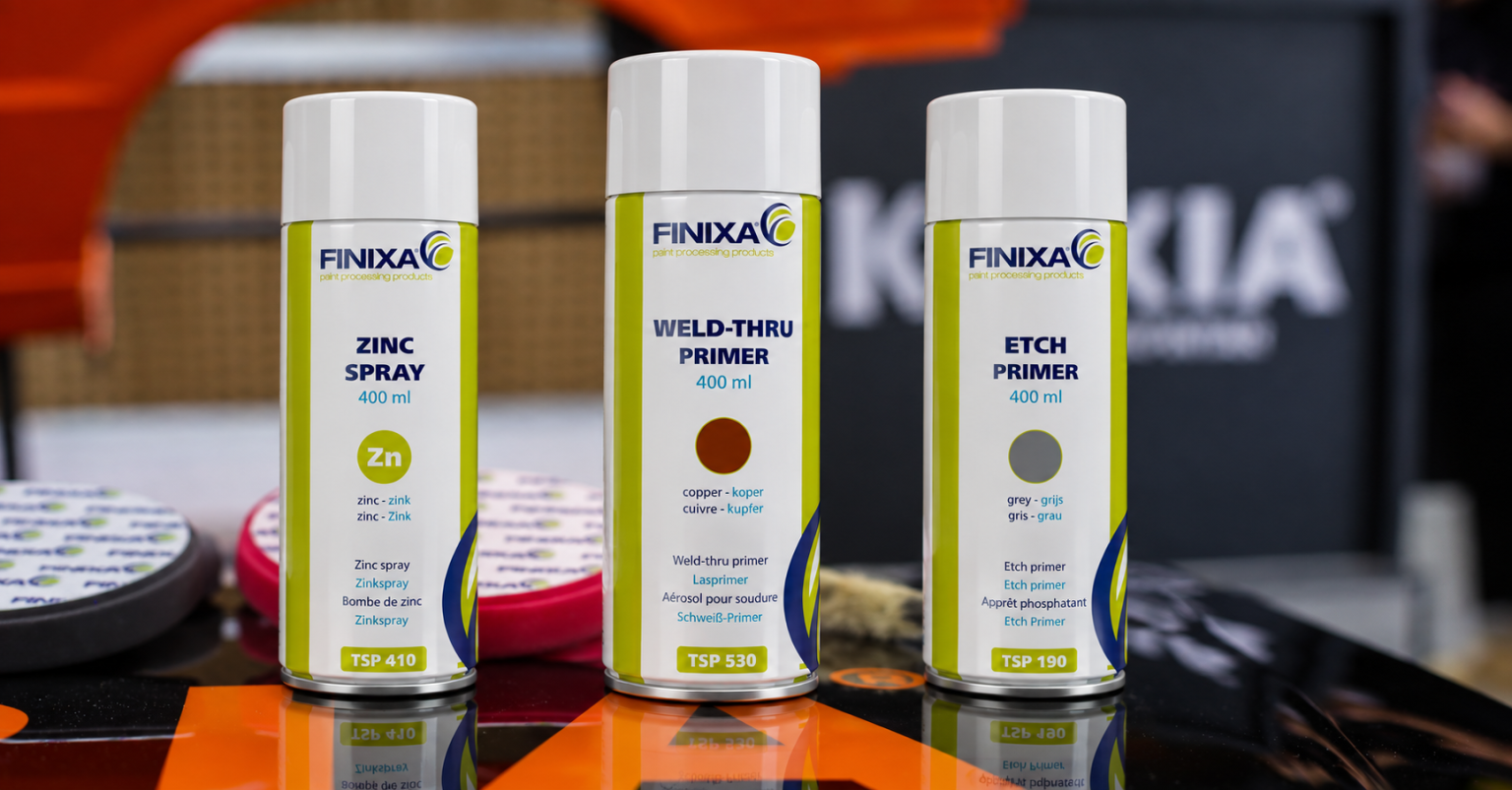
Quick answer: use etch primer when the need is for paint to adhere to clean metal; use zinc spray when galvanized steel has been sanded and lost its zinc coating; and use copper spray (Copper primer) on solder beads. The three are not interchangeable: each solves a different problem of painting on metal.
Choosing the wrong product is one of the most common causes of premature corrosion and paint peeling after just a few months. In this guide, the explanation comes from someone who follows these processes on the factory floor: Alcidene Cardoso, Application Consulting Manager at KORIA.
What are etch primer, zinc spray, and copper spray?
All three are accessory products for the painting system; they do not replace paint, but prepare the metal to receive it. They act on two fronts: the adhesion of the paint to the substrate and protection against corrosion.
According to Alcidene, if we simply apply paint to a substrate without any assistance, several things can happen, such as corrosion and paint peeling. That's why these products exist to aid the process. The substrate can be carbon steel or galvanized steel. The choice of accessory depends on two questions: is the problem adhesion, corrosion protection, or both? And is the area sheet metal or weld bead?
When to use etch primer
Use etch primer When the goal is to improve paint adhesion to clean carbon steel or galvanized steel, it is an adhesion promoter, not an anti-corrosion product.
“Etch primer is an adhesion promoter. It doesn't have a broad anti-corrosion function, but it's an excellent adhesion promoter. Let's call it that: it's a glue between the substrate and the paint,” explains Alcidene.
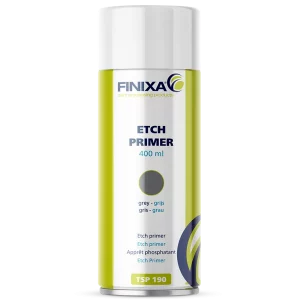
How to apply etch primer
- Clean the surface: free of oil, grease, and dust.
- Apply a very thin layer.
- Allow to air dry for the time indicated on the label (a few minutes).
- Apply the finishing paint over it.
When the etch primer is not enough
- Galvanized steel sanded down to the bare steel: Etch primer ensures adhesion, but it doesn't replace the removed zinc. In that case, the metal is susceptible to corrosion. Use zinc spray instead.
- Welding cord: Etch primer does improve adhesion, but the solder remains exposed to corrosion. Use copper spray.
- Rusty metal: Remove any oxidation beforehand. The etch primer needs a clean surface to work.
When to use zinc spray
Use zinc spray This product is used when a piece of galvanized steel has been sanded, cut, or drilled, exposing the underlying carbon steel. It restores the corrosion protection that the original zinc provided.
“When we sand galvanized steel too severely, the zinc layer is removed, leaving the carbon steel bare. If we apply etch primer or paint directly, it will be very prone to corrosion. How do we replace the zinc that was removed? With zinc spray,” Alcidene points out.
Zinc spray has a dual function. It restores the sheet metal's anti-corrosion protection and also helps the paint applied on top adhere better. The protection comes from the zinc itself, which oxidizes before the steel and protects it even with minor scratches in the paint.
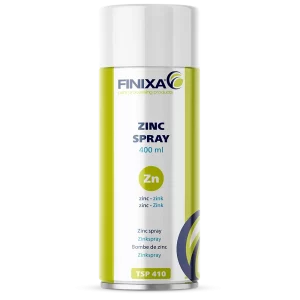
How to apply zinc spray
- Remove loose rust, peeling paint, dust, and oil using a wire brush, sandpaper, and degreaser.
- Shake the container well before use.
- Apply in thin, crisscrossing layers, at a consistent distance, without letting it drip.
- Respect the drying time indicated on the label before applying the finishing paint.
When to use copper spray (copper primer)
Alcidene teaches that for welding beads, use primer covers. It is a material developed specifically for this area, which is the most problematic for painting welded parts.
“Every time you make a weld bead to join two sheets, the bead ends up thick on top. There, the paints have difficulty adhering and interacting with that profile. Can I apply etch primer? You can, it even improves adhesion, but you become susceptible to corrosion. Should I apply zinc spray? It's not suitable for welding. The ideal is copper spray on the weld beads,” he concludes.
In practice, copper spray solves both of the difficulties of soldering at the same time: poor paint adhesion to the weld bead and vulnerability to corrosion at that point. Examples of applications: sheet metal joints, welded metal structures and furniture, supports, and sheet metal repairs.
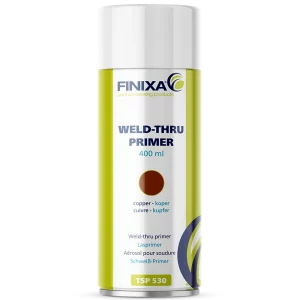
Etch primer, zinc spray or copper spray: comparison
| Product | Main function | Corrosion protection | Where to apply | Not suitable for |
|---|---|---|---|---|
| Etch primer | Promote ink adhesion. | No | Clean carbon steel or galvanized sheet | Galvanized steel sanded down to the bare steel; weld bead |
| Zinc spray | Replace the removed zinc protection. | Yes, and it also helps with grip. | Galvanized, sanded, cut or drilled | Welding cord |
| Copper spray | Protect and prepare the weld for painting. | Yes | Welding beads | — |
In summary, in Alcidene's words: etch primer is for adhesion, pure and simple; zinc spray restores the sheet's anti-corrosive properties; and copper spray is for weld beads.
How to combine the three in the same piece
In a single piece, each area may require a different product. A welded and sanded galvanized structure, for example, receives copper spray on the weld beads, zinc spray on the areas where the zinc has been removed, and etch primer on the clean sheets that only need adhesion. Then, the finishing paint covers everything.
Common mistakes in metal protection
- Treat etch primer as an anticorrosive. It provides adhesion, not protection against corrosion.
- Painting sanded galvanized steel without replacing the zinc coating. Exposed steel oxidizes beneath the paint.
- Use zinc spray on the solder. This is not the right product for the cord.
- Apply to a dirty surface. Oil and grease neutralize the adhesion of any of the three.
In which segments are these products used?
All three are suitable for any segment that paints metal: automotive (repainting and bodywork), industrial (structures, equipment, metalwork) and furniture. In the latter, the application is valid for metal furniture, not wood.
Conclusion
The rule is simple: etch primer for adhesion, zinc spray to restore the galvanized coating's protection, and copper spray for soldering. Using each in the right place prevents rework, paint peeling, and premature corrosion.
KORIA offers all three products in aerosol form and has an application consulting team to guide the process in your workshop or factory. Talk to a KORIA specialist and discover the ideal combination for your parts.